
Chromatic Abstraction. 1934–1992
Umberto Mastroianni
Organised by Il Cigno Arte and presented at the Rothko Museum, the exhibition offers an opportunity to rediscover the work of Umberto Mastroianni, one of the most significant Italian sculptors of the twentieth century. Through a carefully selected group of works, including cardboard compositions, bronze sculptures and a limited number of tapestries created both on the loom and through embroidery, the exhibition highlights the artist’s continuous and inexhaustible desire to experiment with materials and expressive languages.
Mastroianni’s artistic research was characterised by a constant exploration of matter, from bronze to paper, from cardboard to fabric, which he transformed into instruments of expression and creative investigation. Through cuts, folds, engravings and the use of colour, the artist gave life to dynamic surfaces in which material transcends its physical limits and becomes a space of movement, rhythm and emotional intensity.
The exhibition creates an ideal dialogue between Umberto Mastroianni and Mark Rothko, not through a direct relationship, but through a shared artistic aspiration: moving beyond representation to explore the emotional and spiritual potential of the artwork. Through colour in Rothko’s case and matter in Mastroianni’s, both artists transformed their respective languages into vehicles for an experience that goes beyond form.
Umberto Mastroianni (1910–1998) was an Italian sculptor, painter, poet, engraver and teacher. Born in Fontana Liri, he lived and worked mainly in Turin, where he refined his sculptural practice in Michele Guerrisi’s studio. In 1930 he received his first official recognition with the “Tourism Prize” awarded by the Ministry of Public Education, beginning an extraordinary artistic career. In 1958, at the 29th Venice Biennale, he was awarded the International Grand Prize for sculpture with the bronze work “Battaglia” (1957), a recognition that led him to exhibit internationally, including in the United States.
His research developed through an ongoing exploration of abstraction, combining sculpture, painting, engraving and tapestry. His works are characterised by a dynamic relationship between form, matter, and movement, expressed through materials such as bronze, cardboard, paper and steel. Alongside his artistic activity, he taught at the Academies of Fine Arts of Bologna, Naples and Rome. Among his most significant public works are the Monument to the Italian Resistance in Cuneo (1964), the Monument to Peace in Cassino (1987), and “San Francesco” at the Mont Blanc Tunnel (1997). In 1989, he received the first Praemium Imperiale for Sculpture in Tokyo. His legacy is preserved through the Umberto Mastroianni Foundation in Arpino, the Umberto Mastroianni Museum in Rome, and the Umberto Mastroianni Works Study Centre.
Curated by Victoria Noel-Johnson and Farida Zaletilo
Organised by Il Cigno GG Edizioni in collaboration with Pio Sodalizio dei Piceni and presented at the Rothko Museum
With the participation of the Embassy of the Republic of Italy in Latvia
11 September – 29 November 2026
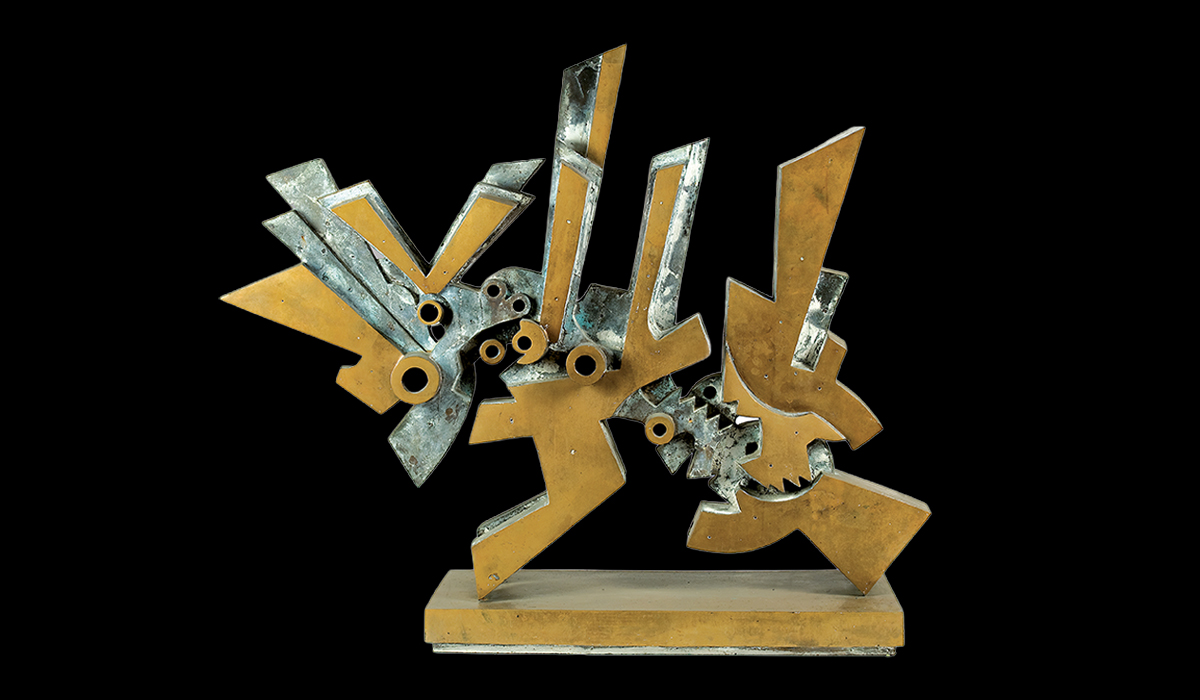
Publicity image: Umberto Mastroianni, “Wild Fury”, bronze sculpture, 130 x 100 x 25 cm, 1975, private collection, Turin, Italy