
Where Art Connects through Light: Rothko Museum Announces Autumn Exhibition Season
At 4 pm on Friday, 11 September, the Rothko Museum opens its autumn exhibition season, bringing together artists of different generations from France, Italy and Latvia. Through sculpture, painting, ceramics, graphic art, textiles and installation, the new season reflects on encounter, understanding and the search for light at a time when shadows grow ever longer.
Light and Shadow: Yves Brayer and Contemporary French Art
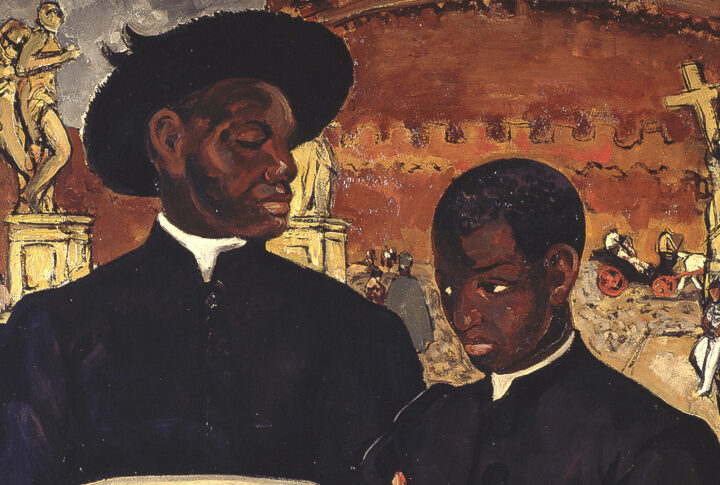
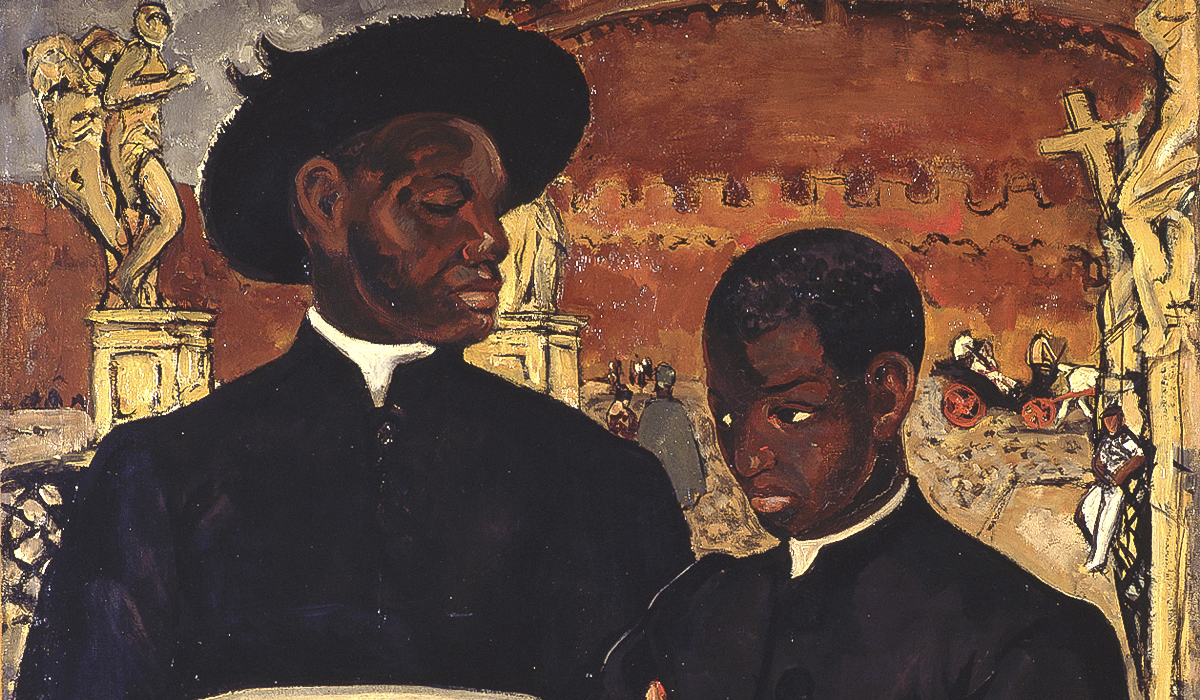
Yves Brayer (1907–1990) belonged to a generation of French artists whose creativity was shaped by a pivotal period in Europe’s search for a renewed cultural identity. Informed by extensive travels across the Mediterranean, his works reveal the richness and diversity of European culture through everyday scenes, where Brayer’s concern is never the outward drama of events, but the presence of people within space and time.
A deeply patient and observant gaze became a defining quality of his art, where composition, rhythm and light are as significant as the subject itself. Light and shadow also run through the exhibition’s contemporary section, bringing together seven French artists – Géraldine Guilbaud, Anthony White, Marie Izaac, Marie Paule Benoit-Basset, Zhenyu Wu, Enrico Nagel and Pascal Pignon JAF. In dialogue with Brayer’s work, they reflect on war and peace, human vulnerability, the importance of memory, the fragility of freedom and the pursuit of light in a world marked by tension and uncertainty.
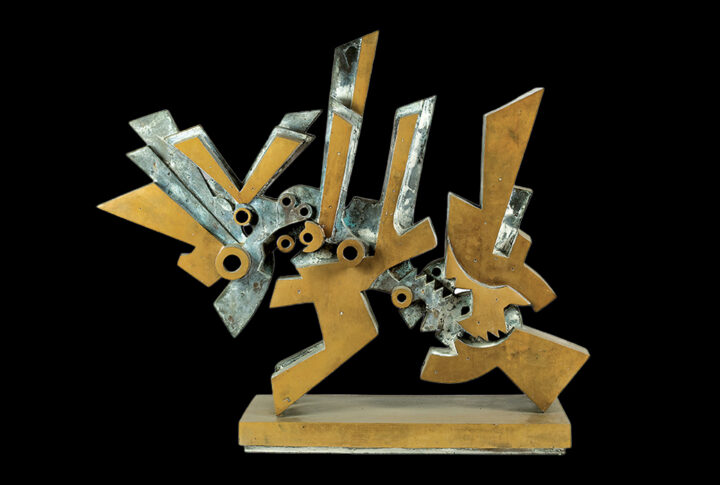
Umberto Mastroianni: Chromatic Abstraction. 1934–1992
The exhibition introduces Umberto Mastroianni (1910–1998), a major presence in 20th-century Italian art, whose practice was a constant and inventive exploration of abstraction across sculpture, painting, graphic art and textiles. From bronze to paper, from cardboard to tapestry, through bold experiments with cuts, folds, engravings and colour, matter in his art becomes a space for movement, rhythm and intense emotion.
At the Rothko Museum, Mastroianni enters into a symbolic dialogue with Mark Rothko – not through a direct relationship, but through a shared artistic aspiration to move beyond representation and explore the emotional and spiritual potential of art.
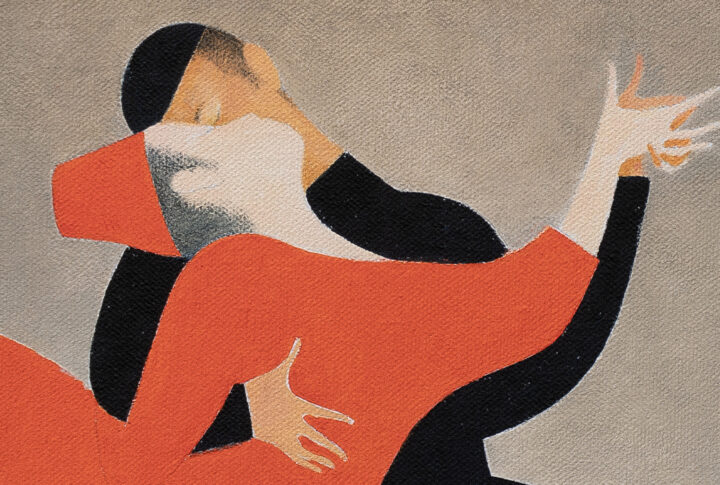
Laima Eglīte: Before Words
Laima Eglīte’s (1945) artistic language evolved from her experience at the Rīga Pantomime – a form of stage art and a way of thinking where movement and gesture became a language in their own right. Moving from the stage to the canvas, she kept thinking in terms of pantomime. This is why movement in her paintings is not depicted but organically present.
According to the exhibition’s curator Uldis Čamans (Mans’s Gallery), characters in Eglīte’s paintings – mimes, clowns, enigmatic figures and elegant ladies – do not tell stories in the conventional sense. They embody a mix of human vulnerability, self-irony and quiet dignity. Here, a gesture, a turn of the head or the rhythm of the hands can say more than narrative itself. In this world, silence carries meaning.
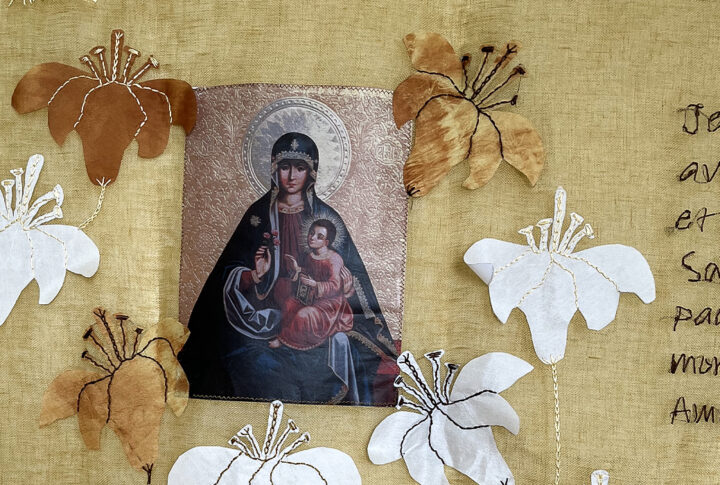
Iveta Laure: Love and Silk
The exhibition presents Iveta Laure’s (1962) earlier work alongside pieces created specifically for the Rothko Museum. Throughout, her focus is on women’s rights and self-determination, family and inherited roles, the body, sexuality, violence and freedom. Creative impulses emerge from the Latvian poet Aspazija’s defiant “NO” and the suffragists’ struggle, rural life and craft traditions in interbellum Latvia, war and deportation, Latgale’s Catholic cultural code, Eastern beliefs about women and love, and the everyday sexism that still persists today.
Silk weaves these diverse stories into a coherent visual language. Painted, embroidered or folded into spatial objects and installations, it absorbs both deeply intimate experiences and traces of collective history.
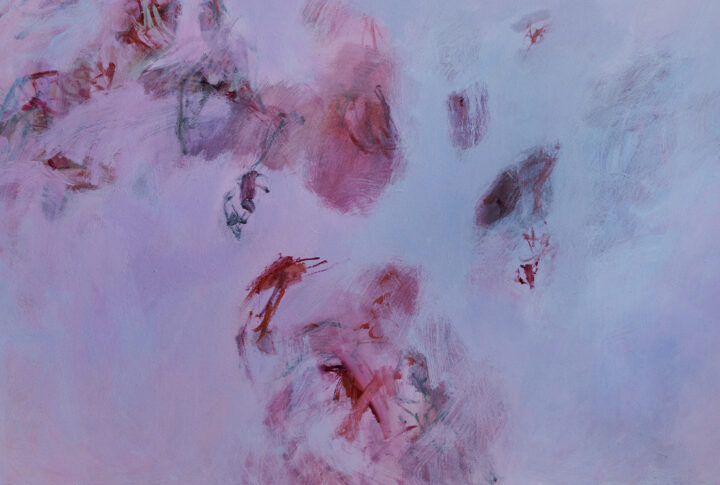
Ingūna Liepa: Towards the Invisible
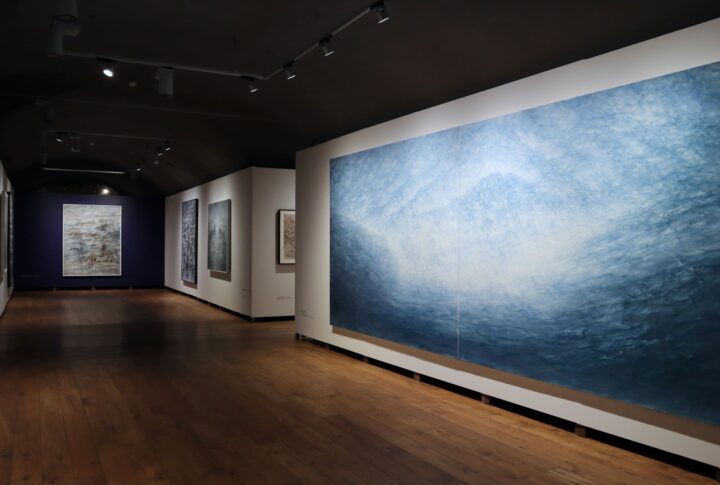
There is no obvious subject or narrative to hold onto in Ingūna Liepa’s (1965) paintings. Forms surface briefly through layers of paint, at times suggesting landscapes, weather, water or dreams, before receding again into abstraction. Colour shapes the emotional resonance. Soft blues, turquoise, violet, muted pinks, warm peach tones and pale greens settle into restrained harmonies, while delicate shifts in tone and transparency allow light to emerge from within the paintings.
The exhibition’s curator Farida Zaletilo points out that Liepa is less concerned with representing the visible world than with translating emotional and sensory experience into paint. Her works invite the viewer into contemplative spaces that continue to unfold the longer one spends in front of them.
Imants Klīdzējs: In Step with the Wind
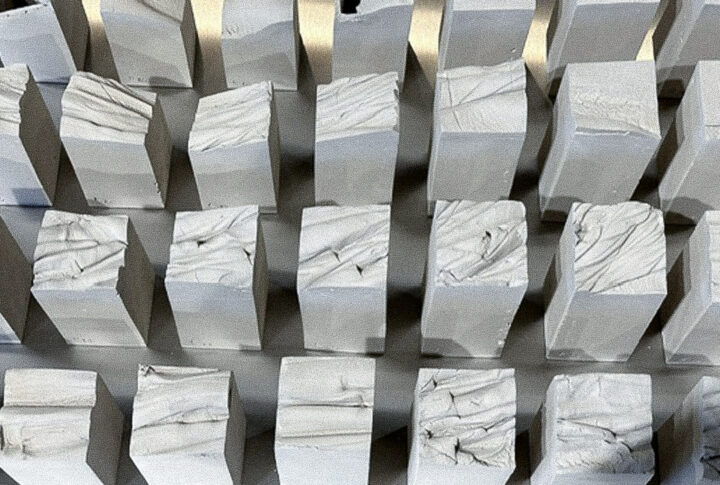
A continuous dialogue between material, time and human experience runs through Imants Klīdzējs’s (1956) ceramics. For over half a century, he has consistently pushed the boundaries of ceramics, turning clay into a space for thought, where form is not an end in itself but a means of exploring the order of the world.
The artist’s monumental compositions take shape from hundreds, even thousands, of elements. Each stands alone, and yet together they form a whole. The exhibition’s curator Māris Čačka points to their structural similarity to human experience: a life shaped both by great events and countless details that gather and acquire meaning over time.
Pēteris Martinsons: Notes from Kecskemét
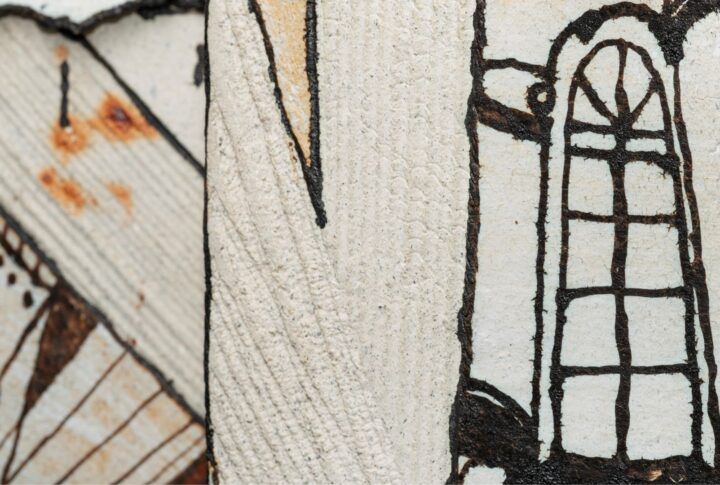
Between 1992 and 2003, renowned Latvian ceramicist Pēteris Martinsons (1931–2013) repeatedly travelled to Kecskemét, Hungary, taking part in residencies and symposiums at the city’s international ceramic studio. The porcelain works he created there – stylised architectural forms now held in the studio’s collection – reveal his distinctive sculptural thinking, sensitivity to form and highly individual approach to material.
Presented at the Rothko Museum’s Martinsons House, “Notes from Kecskemét” concludes a year-long programme marking the artist’s 95th anniversary. Developed in partnership with the Latvian Centre for Contemporary Ceramics, it has highlighted significant works by Martinsons from museum collections in Latvia and abroad.
Exhibition Dates and Opening Night
The Rothko Museum’s autumn exhibition season runs from 11 September to 29 November 2026, with the exception of Martinsons’s “Notes from Kecskemét”, which remains on view through 21 February 2027.
Admission to the new exhibitions is free on opening night.
The Rothko Museum’s autumn exhibition season has been developed in partnership with the Yves Brayer Museum in France, Il Cigno GG Edizioni and Pio Sodalizio dei Piceni, the Latvian Centre for Contemporary Ceramics and the International Ceramic Studio in Kecskemét.
The season is supported by the State Culture Capital Foundation of Latvia, the European Union, the Embassy of the Italian Republic in Latvia, Daugavpils City Council and SERDE residency centre.
Publicitātes attēli:
- Yves Brayer, “Ethiopian Seminarists, Rome” (detail), oil on canvas, 119 x 94.5 cm, 1932
- Umberto Mastroianni, “Wild Fury”, bronze sculpture, 130 x 100 x 25 cm, 1975, private collection, Turin, Italy
- Laima Eglīte, “Dance” (detail), oil on canvas, 20 x 20 cm, 2026
- Iveta Laure, “Hail Mary” (detail), linen and silk, mixed media, 1.60 x 1.45 m, 2024/2025
- Ingūna Liepa, “xxx” (detail), acrylic on cardboard, 132 x 153 cm, 2021
- Imants Klīdzējs, “Appassione Tempo” (detail), porcelain installation, 2024
- Pēteris Martinsons, porcelain object (detail), collection of the International Ceramic Studio in Kecskemét