
The Other Mind. A conversation with Roger Ballen
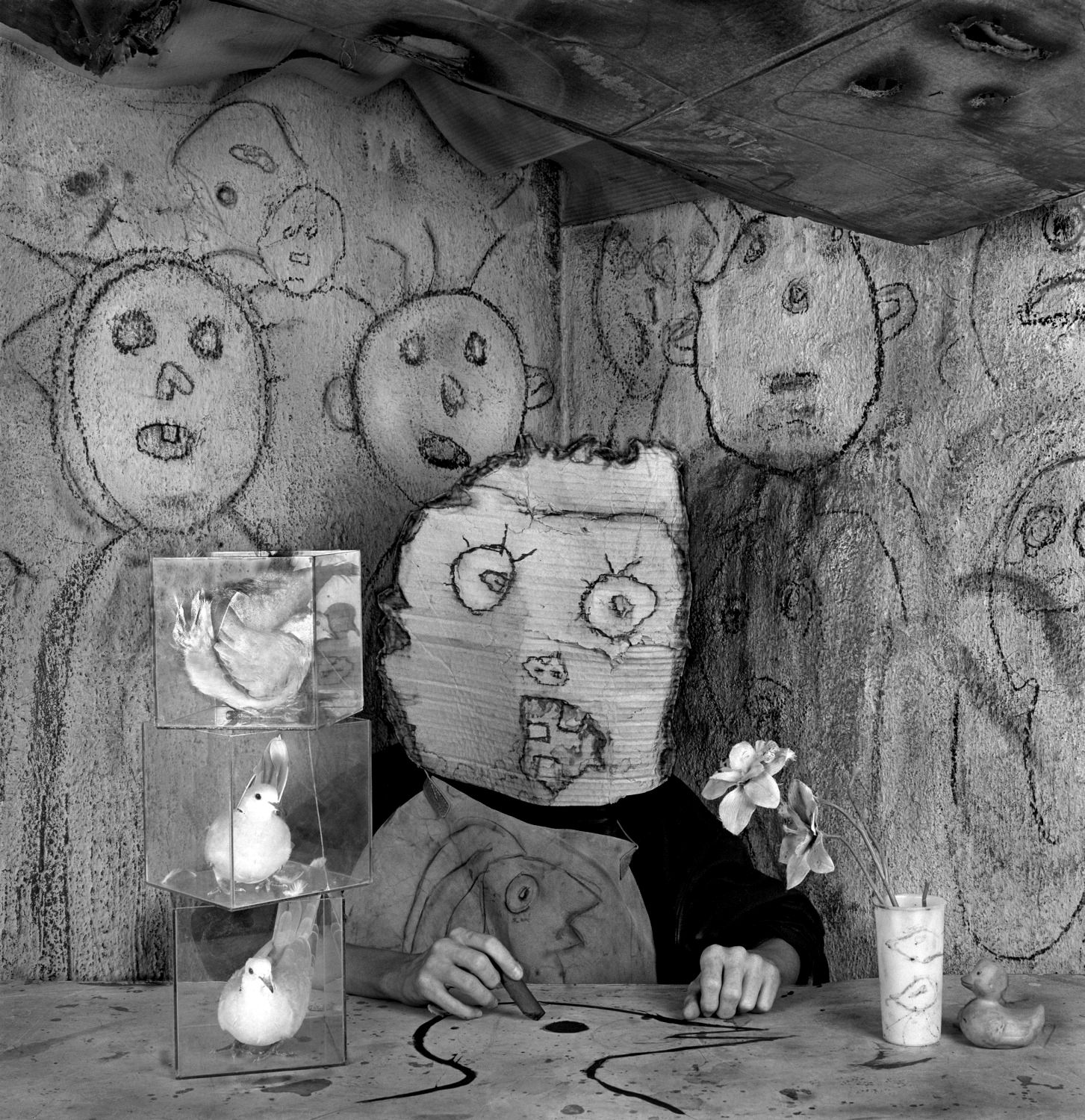
Ahead of the opening of “The Other Mind: Roger Ballen. A Retrospective” at the Rothko Museum in Daugavpils, we offer a first glimpse into the world that will define the new exhibition season. The retrospective brings together five decades of Ballen’s work – from early documentary images to the psychologically charged, symbol‑laden “Ballenesque” environments that have made him one of the most distinctive voices in contemporary photography.
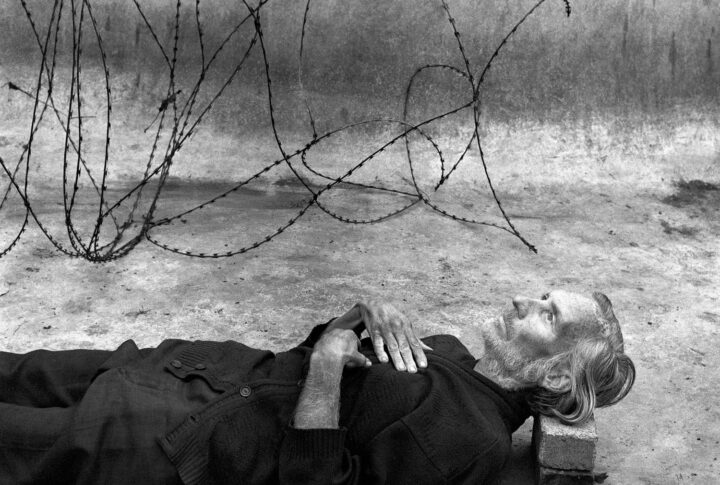
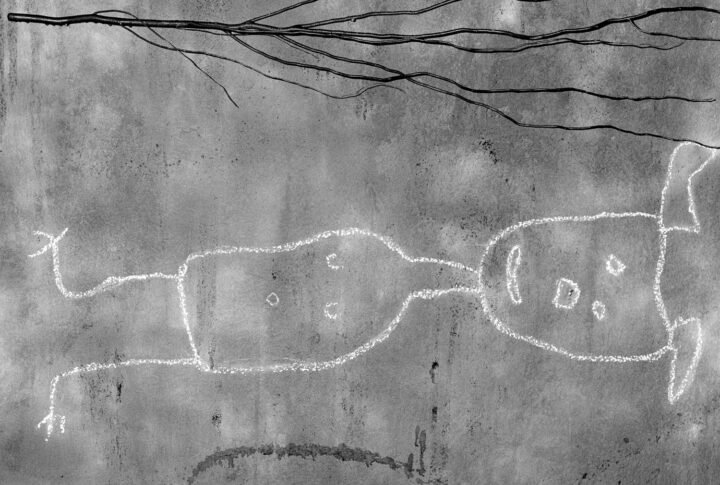
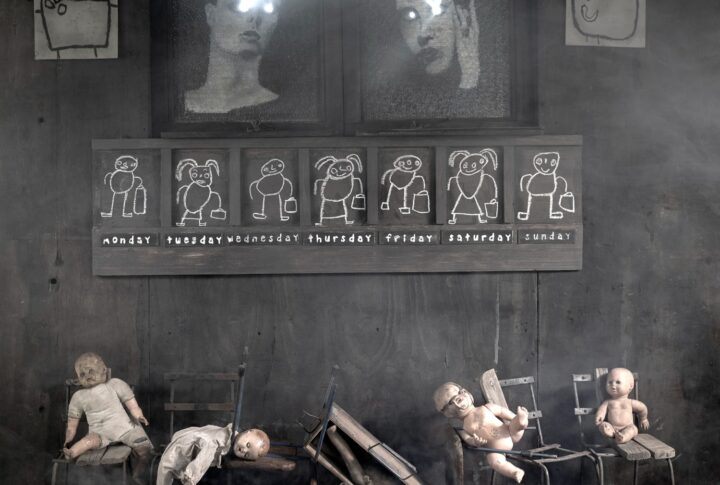
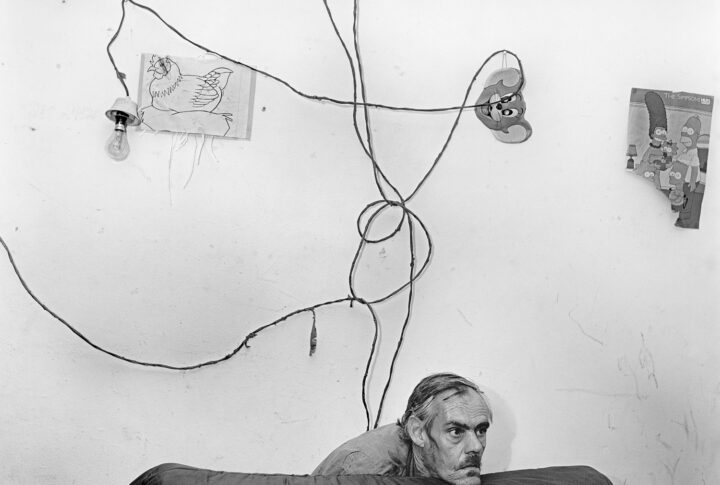
Born in New York and based in South Africa since the 1980s, Ballen began his career documenting rural communities and marginalised individuals. But his artistic journey soon took a radical turn. He developed the now-iconic “Ballenesque” aesthetic – a surreal theatre of the absurd populated by disjointed bodies, animals, wires, dolls and primitive drawings. These elements are not props but psychological symbols, revealing the subconscious forces that shape our existence.
In this conversation, conducted on the eve of the exhibition, Aivars Baranovskis, the exhibition’s curator, speaks with Ballen about truth, instability, collaboration, and the subconscious forces that shape his visual language. The interview opens a door into the inner terrain behind the images – an ideal prelude to the unsettling, immersive experience that awaits visitors at the Rothko Museum this summer.
“The Other Mind: Roger Ballen. A Retrospective” opens on 5 June 2026 at the Rothko Museum, Daugavpils, launching the museum’s summer exhibition season. The exhibition will be on view until 30 August 2026.
On Saturday, 5 June, 18:00-20:00 a meeting with Roger Ballen and his public lecture will take place at ISSP gallery in Rīga, where it will be possible to purchase the artist’s books and receive his autograph.
You grew up surrounded by Magnum photographers – icons of documentary truth. Yet your own work ultimately rejects documentary clarity. At what point did you realise that “truth” in photography was not enough for you?
I think the answer to this question depends on what you mean by “truth.” A traditional photograph is often experienced as a documentation of reality because it seems to mimic what the eye would see. But, in actuality, it always distorts or censors in some way – whether through the transformation of colour and light by the camera, the “clipping” of a panorama or scene into the photographic frame, or the use of depth of field. One certainly cannot say that one sees reality exactly as a photograph presents it. And on a more philosophical note, there is a question as to whether human perception is trustworthy at all: are our eyes themselves constructing an illusory vision?
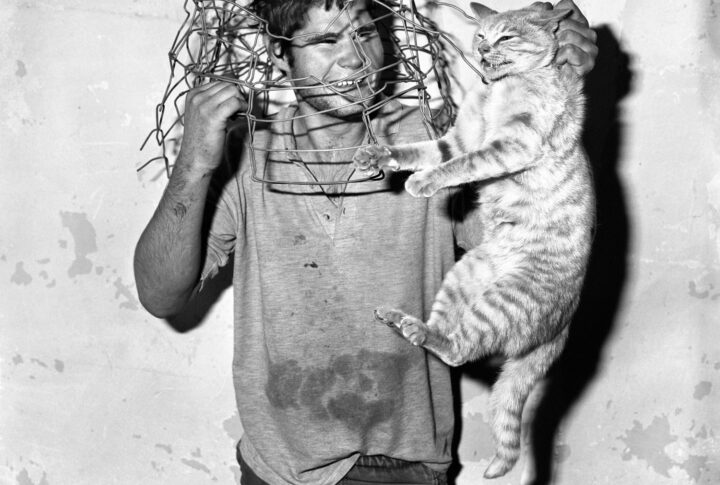
If you are asking when I moved away from what is classified as documentary realism, I can say that it was a gradual process that took place over many years. The shift became most pronounced during the Outland period, between about 1995 and 2000. I began to interact more directly with the subjects and the environment and to construct situations – to create what has since been called the Ballenesque theatre.
You’ve spoken about the influence of Rembrandt’s psychological depth and Rothko’s immersive colour fields. How do these painters continue to inform the emotional structure of your photographs?
Both artists speak to me because of their engagement with states of being. Each, however, uses a very specific vocabulary to produce that psychological experience; this hidden framework is what I understand by the term “emotional structure” of the work.
In Rembrandt, I am moved by the act of obscuring or withholding visual information, which elicits a sense of instability: the way he models light to focus on fragments of the body, or the portrayed absorption of unvarnished figures in their own mysterious state – intimate, yet inaccessible to the viewer. In my work, that state in Rembrandt’s subjects is dispersed across the entire image as a fully immersive experience, through disembodied bodies, animals, objects and drawn elements.
It is in Mark Rothko’s colour fields that I see a similarly immersive psychological space – an environment for entry in which the viewer is absorbed into the work. The pulsating, layered rectangles cultivate a sense of sinking or floating, a transcendent experience that oscillates between doom and ecstasy. This idea of creating a total, enveloping experience has been important to me, particularly in the construction of the sets and spaces in my photographs; they are not backdrops, but full-scale psychological arenas.
Your early years at Berkeley exposed you to counterculture, avant-garde cinema, and the theatre of the absurd. Which aspects of that period still echo in your process today?
I can’t say that I consciously draw on my time at the University of California, but I can say that my time there was formative in shaping both my identity and my artistic voice. It was the epicentre of the counterculture: the questioning and subversion of social conventions taken as truth, including success, authority and conformity.
This interrogation of expectations and schemas (the revelation of the instability, irrationality, irresolvability and illogic of reality) underpins both the avant-garde and the Theatre of the Absurd. One can see it in the lack of narrative coherence, the disintegration of language, mismatched elements and an underlying sense of futility or meaninglessness.
You’ve said that a photograph must feel authentic for the subconscious to accept it. But your images are often staged, constructed, even theatrical. Where is the line between authenticity and manipulation in your work?
Once again, it depends on what you mean by “authenticity.” For me, this quality has nothing to do with whether parts of the image were staged or not. (Of course, if there are live, moving elements, such as the animals in my photographs, then the image can never be fully “staged”.) Rather, it has to do with whether it is believable on a psychological level.
So, for me, the question has less to do with the line between the real and the manipulated and more with the distinction between an image that convinces and one that feels artificial in its voice or expression. It is not a case of the viewer believing the photograph, but rather believing in it in some way. If that belief is there, then the image works, regardless of how it was made.
Your work is built on long‑term relationships with people and places. When you think about your process, what does collaboration mean to you – not just with subjects, but with the spaces, objects, and animals that inhabit your images?
Collaboration, for me, is not something formal or planned. It develops over time through working repeatedly in the same places and with the same people. The subjects, the space, the objects, and even the animals all begin to influence what the image becomes. I don’t completely control the situation, but I don’t simply observe it either… The photograph emerges from this mysterious and unique interaction.
We are living in a world saturated with images, most of them superficial and quickly forgotten. The challenge for any serious photographer is to create work that cuts through that noise and holds psychological weight. This cannot come from imitation or from chasing trends. It comes from persistence, from turning the camera inward as much as outward, and from engaging with the deeper layers of the psyche. The task is to go deeper, to keep working without recognition, and to remain faithful to your own voice. Only then does a distinct visual language begin to form.
Your images balance clarity and chaos – wires, drawings, animals, gestures. How do you recognise the moment when an image reaches the psychological tension you’re looking for?
I recognise that moment when the image produces what I call a “short circuit”; when it disrupts the viewer’s usual way of seeing and thinking. The mind tends to follow certain paths, applying narrative, meaning, or stable categories. I am looking for (or intuiting) the point at which those systems are jolted or begin to fail.
A short-circuiting happens because my photographs operate in a liminal space where opposites collapse: real and unreal, inner and outer, truth and invention. The Ballenesque rooms themselves are important in this regard. They embody a conflicted relationship between civilisation and nature, where opposites both attract and break apart. The space is not governed by logic, but by a kind of irrational order, closer to delirium, dreams, or mirage. Light and dark, humour and unease, cannot be separated.
One cannot think along one’s usual pathways, and in trying to find one’s way out, there is a kind of spark or surge (tension, uncertainty, heightened awareness). This friction, then, is where the image begins to hold the kind of psychological tension I am after.
This exhibition places your work in dialogue with Rothko’s legacy of introspection. How do you feel your photographs resonate within the context of the Rothko Museum?
I think there is a shared concern with confronting fundamental states of being. Rothko spoke about expressing “tragedy, ecstasy, doom”, and that articulation is important – it points to an art that is not descriptive, but experiential and psychological. His paintings are not just colours to look at, they are places, environments or experiences to enter.
Within the context of the Rothko Museum, I think the resonance lies in this shared intention: to create an encounter that bypasses explanation and moves directly into a psychological or emotional state. The languages are very different. But we do share that ambition to confront something elemental in the human condition.
When you strip away the theories, symbols and interpretations people project onto your work, what is the one thing you’re actually trying to understand about yourself?
At its core, my work is an attempt to come to terms with the more mysterious, unconscious workings of my own mind. It’s less about trying to define something clearly and more about staying in contact with processes that aren’t fully accessible or easy to understand.
I find myself drawn to the way the mind constructs meaning, how it shapes what we take to be reality. The work pushes against my own need for control and brings me closer to impulses, contradictions and instabilities that don’t fit neatly into a logical framework.
It touches on very old philosophical questions of metaphysics and epistemology. What is real, and how do we know it? To what extent can we trust perception or even thought itself? I don’t think the work resolves these questions. If anything, it makes me more aware of how uncertain those foundations are and how much of what we take for granted might be constructed, fragile or even misleading.
You’ve been exhibited everywhere from New York to Tokyo and London. When you look at this exhibition in Latvia, what makes it more than just another retrospective – what is the unique lens through which you want viewers here to enter your work?
I see each exhibition is an opportunity to reconfigure the work, to create a particular kind of experience.
In a place like the Rothko Museum, there is already a strong emphasis on introspection and emotional engagement, so this primes the viewer to have a certain stance or approach towards the work. Rothko’s presence creates a certain sensitivity to the interior life of the viewer. So rather than approaching the work historically, I would hope viewers enter it through that same kind of inward attention.
What is it that keeps the chaos of the mind from taking over – and should we even try to stop it?
I don’t think chaos is something that can, or should, be entirely controlled. What we call control is often just a surface structure that helps us manage a much more unstable inner reality. In my work, I’m not trying to eliminate that instability, but to give it form, to create a space where conflicting elements can exist without resolution. The question is not how to stop chaos, but how to engage with it without being overwhelmed, to hold that tension rather than escape it.
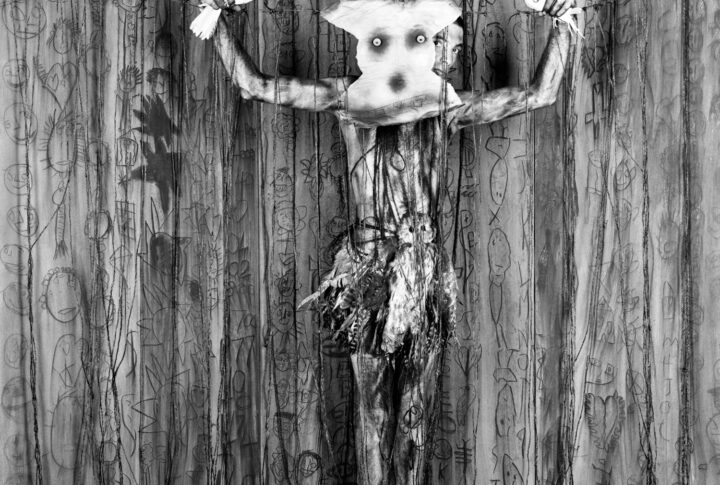
Publicity images:
- Roger Ballen, Artist, photography, 2013
- Roger Ballen, Alter Ego, photography, 2010
- Roger Ballen, Cat Catcher, photography, 1998
- Roger Ballen, Introspection, photography, 2001
- Roger Ballen, Place of the Upside Down, photography, 2004
- Roger Ballen, Omnipresent, photography, 2021
- Roger Ballen, Head Below Wires, photography, 1999