
Awakening – Entropy Reimagined in Chinese Art and Culture
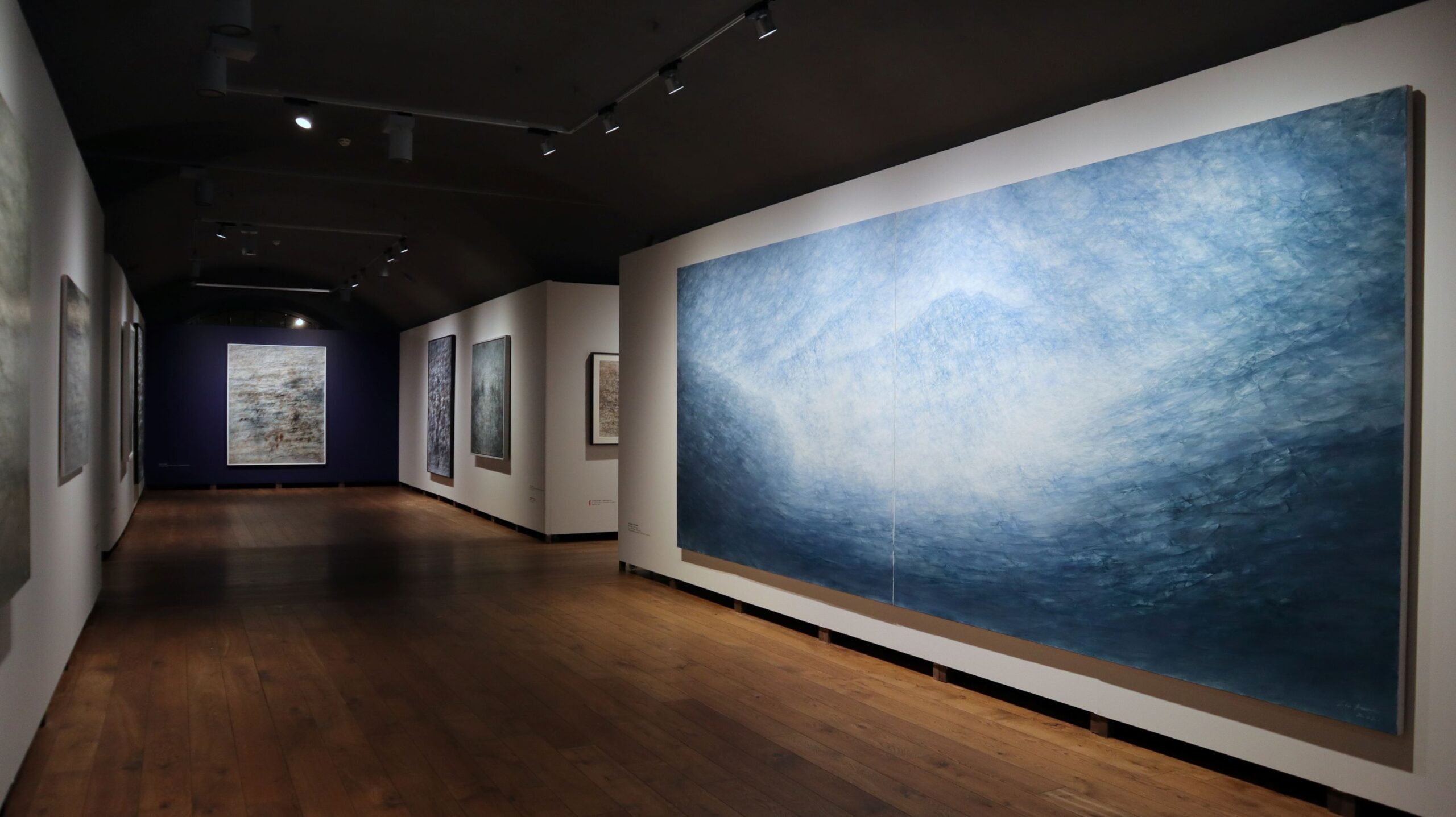
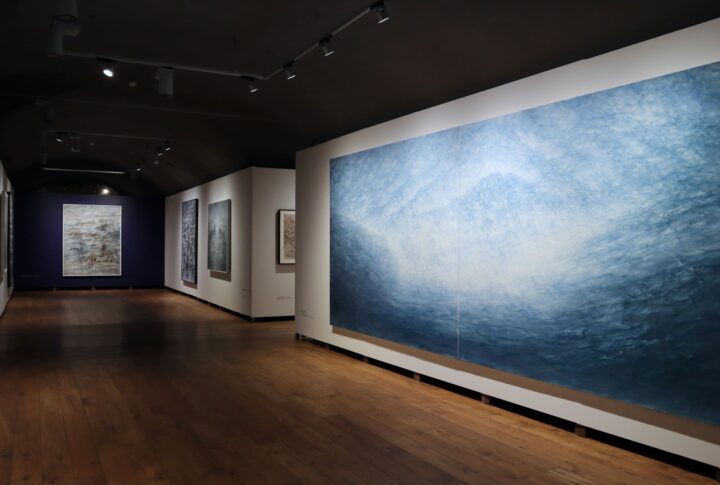
Currently on view at the Rothko Museum, Liu Guofu’s solo exhibition, “Painting of Entropy“, offers insight into the distinctive visual language of one of China’s leading contemporary abstract painters. Among the works on display is the monumental diptych Awakening (2021), commissioned by MGM for Art Macao: Macao International Art Biennale 2021 and presented in Daugavpils as part of the MGM Chairman’s Collection. In the following article, the exhibition’s co-organiser, 3812 Gallery, explores the work’s artistic and philosophical context, its place within Liu Guofu’s wider practice, and the story of the collection to which it belongs.Awakening – A Tide Between Depth and Illumination
At Liu Guofu’s “Painting of Entropy” exhibition at the Rothko Museum, order and dispersal coexist in measured tension. Structure yields to diffusion; stillness is permeated by motion. Within this shifting equilibrium stands Awakening (2021) – a monumental diptych measuring 200 × 500 cm, articulated through layered tonalities of blue that evoke both oceanic depth and atmospheric suspension.
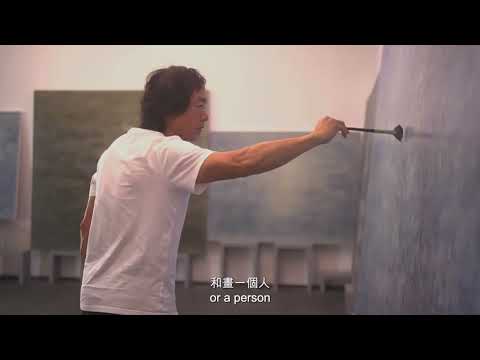
From a distance, the work appears as a submerged horizon – a field of chromatic vibration through which light seems to rise rather than descend. The painting resists spectacle. Instead, it unfolds gradually, rewarding duration and proximity. As the viewer approaches, innumerable linear brushstrokes emerge, each applied with disciplined restraint. These strokes do not construct illusionistic depth in the Western perspectival sense; rather, they generate a spatial field structured through rhythm, accumulation, and breath.
Embedded within this painterly language is the concept of qi – vital energy – not illustrated but enacted. The canvas becomes a site of circulation. Movement is sustained and interior, calibrated rather than dramatic. The surface oscillates between density and openness, inviting the eye to drift and return.
While articulated through the notion of entropy, Awakening does not approach dissolution as terminal decline. Entropy here functions as generative condition – a state in which transformation unfolds through fluctuation. Density and void remain interdependent; dispersal becomes renewal. What initially appears as atmospheric abstraction gradually reveals itself as deliberate equilibrium.
Commissioned in 2021 by MGM for Art Macao: Macao International Art Biennale 2021, the work was first presented at MGM COTAI in Macau, China as part of the MGM Chairman’s Collection. Installed across expansive architectural spaces, Awakening engaged directly with scale and environment, extending beyond the autonomy of the canvas toward immersive spatial presence. The exhibition itself was named after the painting, underscoring its conceptual and symbolic centrality.
Its subsequent presentation at the Rothko Museum introduces a resonant cross-cultural dialogue. In proximity to the legacy of Mark Rothko, whose practice similarly privileges chromatic depth, atmosphere, and contemplative duration, Liu’s painting enters a broader discourse on abstraction and metaphysical reflection. Yet its philosophical grounding diverges. Where Western abstraction has often framed the void in existential terms, Liu’s entropic field arises from an East Asian cosmology in which flux is cyclical and generative. Dissolution does not imply absence; it signals transition.
Through tonal modulation, compositional restraint, and a spatial conception unbound by Renaissance perspective, Liu extends the vocabulary of contemporary Chinese abstraction. Awakening stands not as spectacle but as proposition – an inquiry into how painting may still sustain contemplation within an accelerated present.
MGM Arts & Culture – Bridging Cultures Through Art
Macau, as a locus of exchange between China and Europe, has played a leading role in fostering dialogue on art, cultural circulation, and mutual understanding. Operating within such a pivotal geography and shaped by a kaleidoscope of cultural exchanges, MGM assumes the role of a bastion of traditional Chinese art, an ambassador of deeply rooted Chinese culture, and an innovator of cross-cultural integration.
Unveiled in 2018 for the opening of MGM COTAI under the vision of Pansy Ho, the MGM Chairman’s Collection emerged from an understanding of art not as decorative adjunct to architecture, but as a long-term cultural commitment embedded within lived space. Shaped from its conceptual stage by Calvin Hui, Co-founder of 3812 Gallery, who was appointed curator and art advisor to establish its intellectual and aesthetic framework, the Collection was conceived around the principle of “Eastern origin, contemporary expression”, the initiative was structured not simply as acquisition, but as articulation: a platform through which contemporary Chinese artistic practices might engage historical lineage while extending their formal and philosophical reach. Chairman’s Collection’s curatorial approach, in particular, reflects this condition: supporting artists whose practices revisit inherited traditions while reconfiguring them within contemporary discourse.
From an initial group of bespoke commissioned works, the Collection has developed into a significant and steadily expanding assembly of several hundred works integrated throughout MGM’s architectural environments. Art is not confined to discrete galleries; Art of Living inhabits seamlessly the moment you step in, where aesthetic encounter intersects with daily movement and collective cultural tourism experience. The common thread running through all these programmes is the conviction that tradition should be neither preserved as a static inheritance nor displaced by novelty, but approached as a renewable resource through a contemporary lens. The Collection thus aligns with broader museological concerns: how cultural memory persists, transforms, and circulates across contexts, generations, and audiences.
Liu’s oeuvre exemplifies this continuity. Through the commissioning of Awakening and the acquisition of works spanning different stages of his practice, the Collection has accompanied the evolution of his entropic vocabulary across media, from oil to ink to wood panel. His artistic language remains open rather than fixed, responsive to scale, architecture, and interpretive setting.
Beyond acquisition, the MGM Chairman’s Collection has fostered intellectual exchange through symposia and cultural programmes accompanying major exhibitions, including those presented during Art Macao: Macao International Art Biennale. Patronage, in this context, functions as facilitation, enabling dialogue among artists, scholars, and audiences across regions. In 2024, POLY MGM MUSEUM was established at MGM MACAU as a world-class cultural landmark committed to preserving China’s invaluable intangible heritage and promoting meaningful global cultural. Through cultural inheritance, international dialogue, technological innovation, and immersive experiences, the museum showcases historical artefacts and intangible cultural heritage from Silk Road nations. In parallel, MGM’s active participation and initiation in Art Basel, Nurture Art Talents Program, symposia further underline its core value.
The Collection may therefore be understood less as repository than as evolving framework of stewardship. It reflects a contemporary model in which curatorial vision, institutional support, and artistic autonomy intersect.
Through sustained commitment, MGM positions itself within an ongoing international dialogue on cultural memory, abstraction and metaphysical reflection, with cultural tourism woven into its artistic and cross-cultural practice as a vital site of exchange where histories, geographies, and modes of perception continuously intersect and evolve. MGM endeavours to bridge East and West, bringing the world to China, and China to the world with leading cultural identity pride.
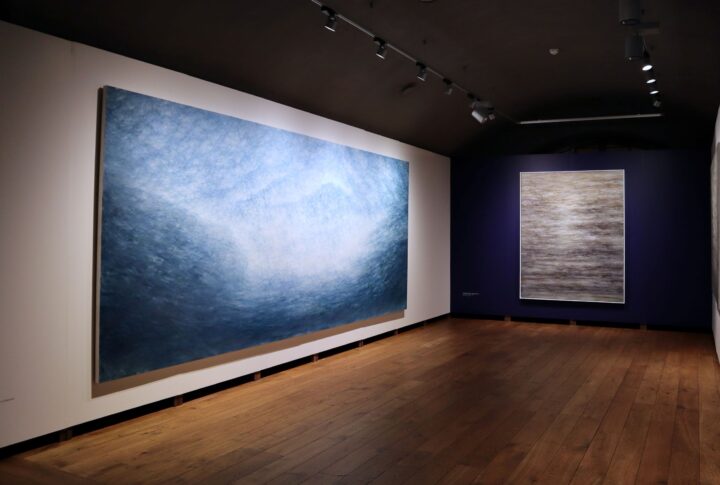
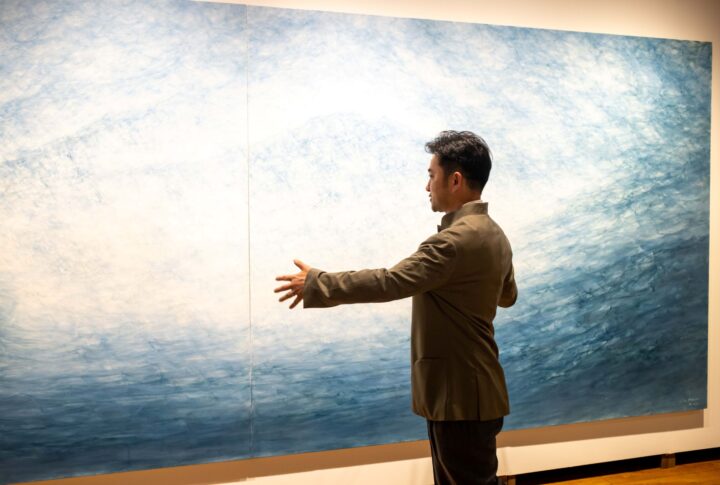
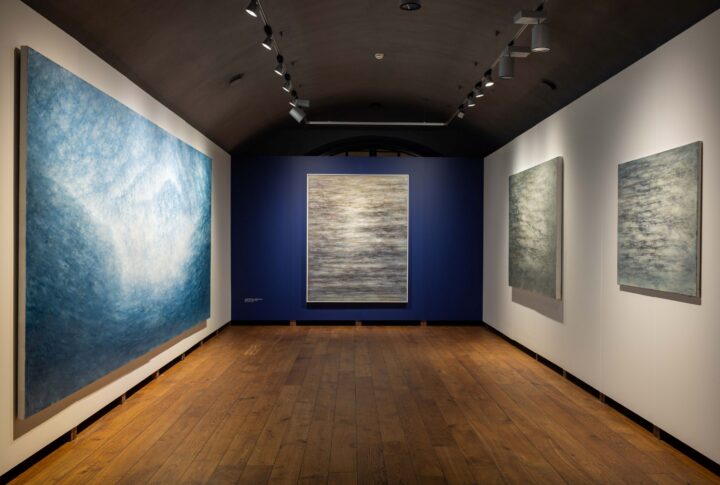
Publicity images: Liu Guofu’s “Awakening” at the Rothko Museum (photographed by Didzis Grodzs)