
Archive
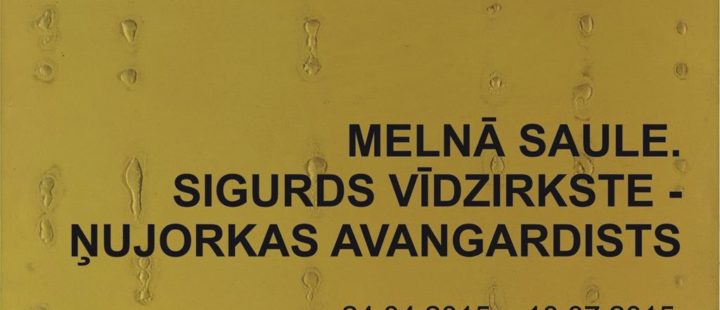
CYBERNETIC PAINTING OF SIGURDS VĪDZIRKSTE THE LOST CODE
- - 10.07.2015
Sigurds Vidzirkste- New York Avant-Gardist exhibition „BLACK SUN".
I am not inclined to attach great value to words. Works created from words are only a performance but not a creation. They are limited. They are only mere reflections of the direct perception. I would rather value works that grow out in the direct process of work. Painting should take place just in the physical world. The first creative idea lacks form. It is a pure essence that does not contain means of expression in itself. But then there is a second created stage of the idea with form and development which can be expressed in symbols. The idea per se is not creative, but it possesses magnetic attraction and aura which suit for a further development of new ideas. 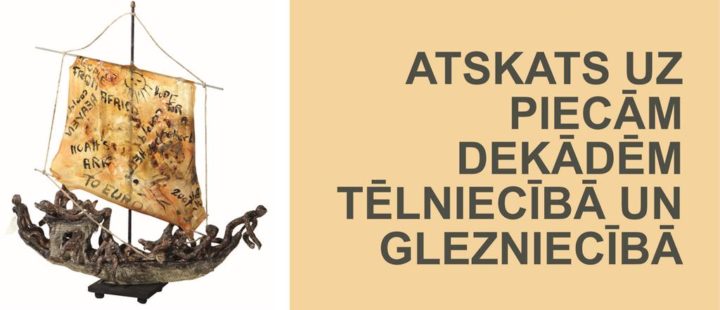
Helga Kreuzritter “A GLANCE AT FIVE DECADES OF SCULPTING AND PAINTING”
- - 06.08.2015
Helga Kreuzritter
"A GLANCE AT FIVE DECADES OF SCULPTING AND PAINTING"
"I try to offer aesthetic thoughts. The fact that even some of the works are occasionally provoking is probably unavoidable and this is used by me over and over to address the viewer directly. I'm always happy when in this way I can develop conversations with my viewers, for example, at openings." 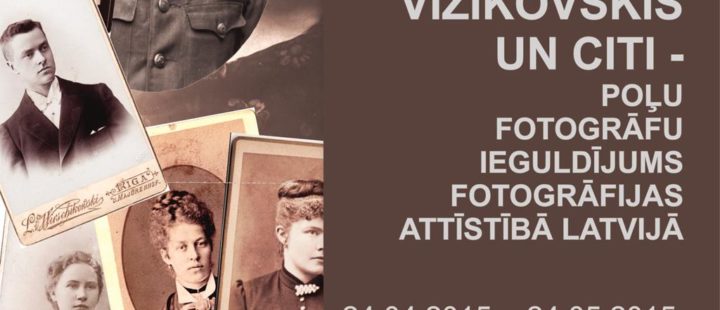
Wyrzykowski and others – contribution of Poles to the development of photography in Latvia
- - 23.04.2015
Wyrzykowski and others - contribution of Poles to the development of photography in Latvia
Exhibition “Wyrzykowski and others - contribution of Poles to the development of photography in Latvia” consists of more than one 100 a century old photographs. The exhibition presents the works from the end of 19th and beginning of 20th century, made by Polish-origin photographers, who lived and worked at the territory of modern Latvia. All the photographs were made in 1868-1940 in Riga, Liepaja, Ventspils, Jekabpils, Daugavpils and Jelgava by Leonard Wyrzykowski, Jóżef Kowalewski, Włodzimierz Malinowski, Bolesław Talat-Kiełpsz, Leon Bećalis, Alfons Obolewicz and other photographers of Polish origin. All of them were the artists who contributed to modernization of photography at that time period, widely using new techniques, lighting and composition in their works.
The exhibition is a common project of the Embassy of the Republic of Poland in Riga and Vladimirs Eihenbaums, director of the wooden building renovation center “Koka Riga”. The photographs come from the collection of V.Eihenbaums, Jerzy Beinarowicz as well as from the private archives of the descendants of Leonard Wyrzykowski, Bolesław Talat-Kiełpsz and Leon Bećalis. 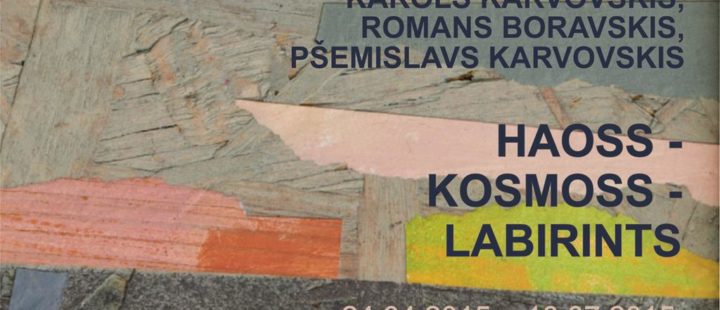
Chaos – Cosmos – Labyrinth KAROL KARWOWSKI ROMAN BORAWSKI PRZEMYSLAW KARWOWSKI
- - 30.03.2015
Chaos – Cosmos – Labyrinth
Karol Karwowski
Roman Borawski
Przemyslaw Karwowski
Abstractionism - whether in its psychological and individualistic “hot” form, or in the “strict”, geometric one, sometimes dedicated to the creation of social utopias - does not solely consist in an abstraction from the depiction of objects, but also from the merely apparent, the visible and the invisible, chaos, and the spiritual world. A common denominator of abstract art is the artists' search for archetypes, so as to bring order to chaos. For this reason we can assume - and such an assumption is very comforting - that beyond this chaos we can find a sacred geometry, when, looking at the big picture, we can distinguish in a stream of events the regularity of some particular elements. The timeless intuition of artists is also reflected in contemporary science, be it in the self-repeating form of the Mandelbrot set (fractal geometry) or in Lorenz's meteorological theory, which defines chaos as a sphere of “seemingly random and unpredictable behavior that nevertheless proceeds according to precise and often easily expressed rules”. In art there are no neutral or “innocent” forms, unaffected by anything else's meaning and thus truly abstract.
This thought was precisely expressed by Kandinsky in his treatise Concerning the Spiritual in Art (1912). Rothko was articulating this idea when he declared: “I'm not an abstract artist… I'm not interested in the relationship of colour or form or anything else. I'm interested only in expressing basic human emotions - tragedy, ecstasy, doom, and so on”. 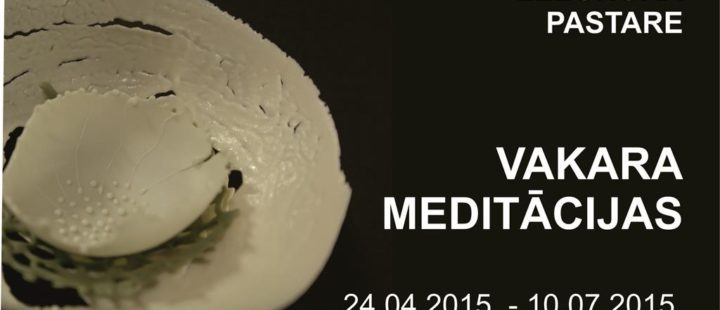
Eleonora Pastare „EVENING MEDITATIONS”
- - 14.04.2015
Eleonora Pastare „EVENING MEDITATIONS"
"Colorful day and night, colorful seasons. Dreams and reality. Everything we are facing at every particular moment, especially those little things that we probably notice in a different way than others, or sometimes do not notice at all, is sufficiently important for a flight of creative thought and idea.
The variability and the constancy of nature is a never-ending source of inspiration, it is the basic foundation for creative work or for flight of dreams. And if any of these dreams is going to be materialized, there appears an insurmountable wish of sharing it with others."
Eleonora Pastare
By summing together the anniversaries of life and creative work, the year 2015 passes in a sign of "100" for the Daugavpils born artist Eleonora Pastare form Livani. Eleonara was born in 1954, in 1974 she graduated from Ceramic Department of Rezekne High School of Applied Arts and in 2007 she gained Master degree in Arts from Daugavpils University. Since 1977 Eleonora Pastare participates in exhibitions and various art projects in Latvia and abroad. She also has an extensive experience in education; more than twenty years of her creative work Eleonora "explores the world of ceramics" together with children. 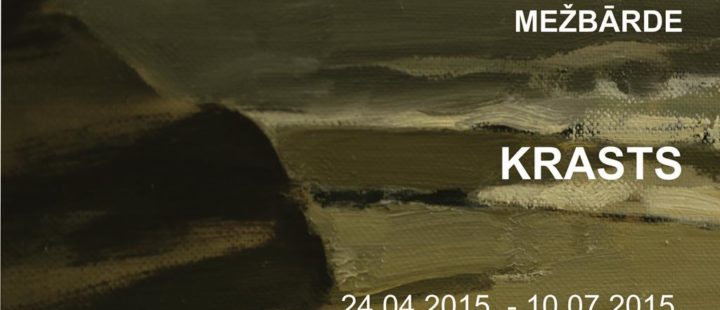
Valda Mežbārde “COAST”
- - 16.04.2015
Valda Mežbārde
"COAST"
“The shore is my horizontal line, my fancy and real horizons with stones like melting islands. It is the place where I can reach infinity, tearing myself away from my reality.”
Valda Mežbārde
Valda Mežbārde, resident of Daugavpils, was born in 1946, Riga. In her childhood she read and drew much and avidly. Later she studied art in J. Rozentāls Art Secondary School and in Art Academy of Latvia. In the late 60-s and early 70-s of the 20th c. she worked as a photographer at the Latvian Art Museum where she had the opportunity to acquaint herself with the original works by Latvian artists, with work of organizing exhibitions and the world of art people in general. In 1973, the artist arrived in Daugavpils. This was the time when a lot of young artists came to live and work here. Later, many of them left the city, but Valda's work had always been linked with Daugavpils and the art life of the city. In 1974, Valda Mežbārde became a member of Latvian Artists Association, and at that time her membership contributed much to livening up the life of Daugavpils artists. She was also one of the organizers of Art Day activities in Latgale. She has participated in painting art plein-airs, has pained much and intensively, and has also tried her hand at big-size and monumental mural paintings. She has been participating in exhibitions since 1969. The artist has had more than 15 solo-exhibitions held in Latvia and abroad. 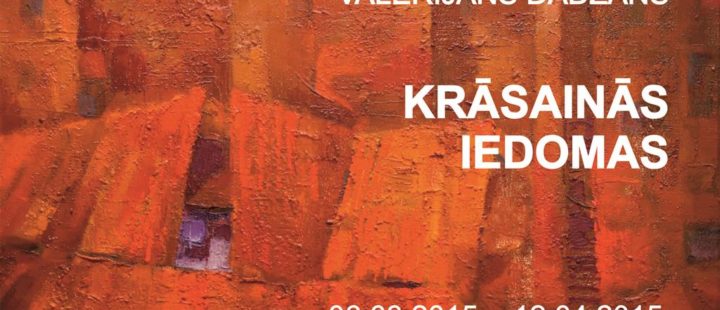
Valerijans Dadžāns „COLORFUL FANTASIES”
- - 02.03.2015
COLORFUL FANTASIES
Valerijans Dadžāns was born on February 11, 1932, in Abrene district, Viļaka civil parish, he died on March 25, 2012, in Jelgava. In 1953, he graduated from the Faculty of History at Latvian State University. Since 1953, he had been a teacher at Atašiene secondary school, Vircava secondary school, Jelgava boarding-school, at school in Jugla sanatorium; he had been a research associate of a former Revolution Museum (at present – Latvia’s War Museum). He was a self-taught painter and had studied painting also privately. He also was a metal craftsman and stage designer in Jelgava music school. From 1965 he began participating in exhibitions. His solo exhibitions have been held in the gallery “Jāņa sēta”, Riga (1993), Ģ. Eliass Jelgava History and Art Museum (1993, 2002), J. Čakste museum “Auči” (2000, 2001 2002), in Stuttgart, Germany, (1994), in Nashville gallery, USA, (2002). The memorial exhibition was held in Ģ. Eliass Jelgava History and Art museum and in the gallery “Antonija”, Riga (2013). He was a member of Jelgava Artists Association since 2009. 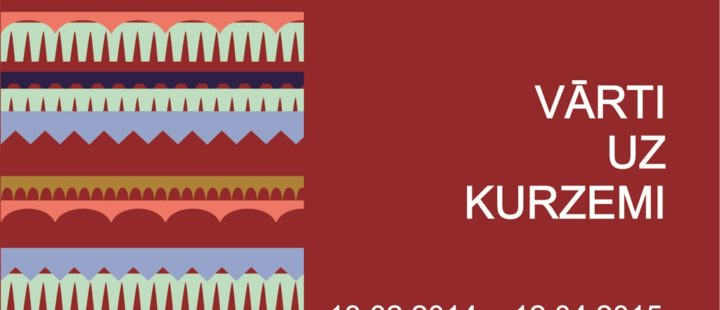
„THE GATE TO KURZEME”
- - 21.01.2015
THE GATE TO KURZEME
(A travelling exhibition of the 2014 Art and Poetry Days in Kurzeme)
One of the traditions characteristic of Kurzeme is to organize Kurzeme Art and Poetry Days every other year, done already for the tenth time (since 1999). Every time, the festival is organized by some of a bigger town of Kurzeme. This year, the artists of Tukums joined their forces with writers and held a joint art and poetry festival. The artists created art works where poetry and art were merged into a united synthesis (a video “Pretī” [Opposite], poets’ dedications to art works “Readings of the Exhibition” etc.). The festival was aimed at demonstrating the latest achievements of Kurzeme artists and writers, their joint analysis of processes and at setting aims for the future.
Consequently, the exhibition “The Gate to Kurzeme” was organized, and it included art works created by artists from towns and cities (Liepāja, Ventspils, Saldus, Talsi, Tukums, Kandava, Aizpute), from seaside villages (Saunags, Vaide, Kolka, Kaltene), as well as from other places of Kurzeme. It incorporated and joined various kinds of art and different generations of artists, thus showing art tendencies typical of this region. A special collection from this exhibition was assembled for presenting in Daugavpils Mark Rothko Art Centre in February, 2015. It will give an insight about art processes where artists draw their inspiration in Kurzeme. 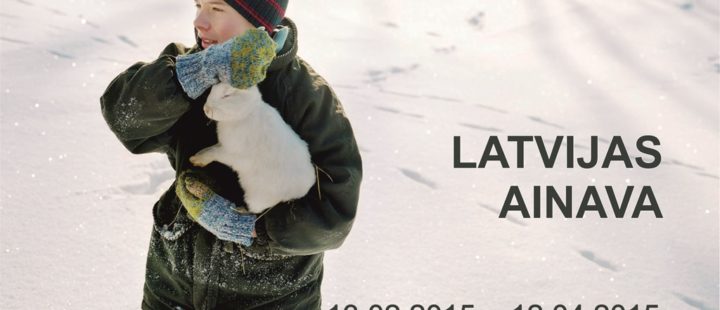
“Latvian Landscape”
- - 21.01.2015
Latvian Landscape
In this exhibition, five Latvian photographers (Arnis Balčus, Reinis Hofmanis, Alnis Stakle, Iveta Vaivode and Ilze Vanaga) and five scholars (Sergejs Kruks, Klāvs Sedlenieks, Kārlis Vērpe, Laine Kristberga and Ivars Austers) have co-created a unique interdisciplinary study of contemporary Latvian landscape. Since 2013, they have worked in pairs (scholar/photographer) to create five semantically linked series of photographs and five articles, which combine to approach a specific topic through double means of photographic narrative and text. The overarching theme of the exhibition is landscape, which is construed as a surface for contemplative viewing, a stage for a quaint or ordinary event and, beyond any doubt, a catalyst for an individual’s becoming who they are only when embraced by a particular landscape.
Nowadays, to the overwhelming majority of people observing a landscape, whether through actual presence or by mediation on an image, is a common enough process as they pass time by gazing through the window of public transport, explore the content of digital or printed media, look out of one’s bedroom window, etc. Yet, one cannot and was never able to experience genuine natural landscape. Even remote natural parks untouched by civilization or desert-like sunsets on a remote beach will always have a postcard look or appear as images from a commercial advertisement, inevitably loaded with culturally coded meanings. Our understanding of the observed landscape is always psychologically and/or socially constructed, which in most cases also determines our preconceptions, feelings and ideologies about the essence of the picturesque and the sublime fundamental elements of landscape. 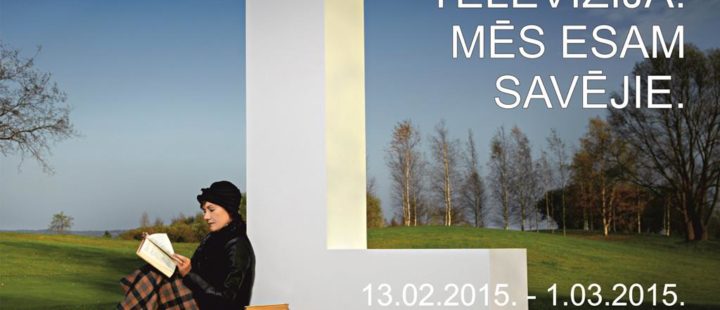
“TELEVISION. WE ARE YOUR OWN PEOPLE.”
- - 26.01.2015
TELEVISION. WE ARE YOUR OWN PEOPLE.
It began in 1954 as an inquisitive adventure – modish and unusual. Now, more than half a century we are together. Through complicated times of oppression, through so diverse years of independence until today. We are together. Our values are RESPONSIBILITY, EXCELLENCE, INDEPENDENCE. Our vision – to be a responsible, independent and excellent company which INSPIRES, INFORMS, EDUCATES and ENTERTAINS its viewers all over Latvia.
We – through hopelessness, expectations, through spitefulness and Awakening. We – through lessons of freedom, horrible nightmares and anguish, stumbling and rising, to always go further. Our television shows what is essential, makes you think and is always with you. We are your own people.
Yours Latvian Television
The author of photographs, Valts Kleins:
“LTV is stories about life we are living, and in which we are searching for reliable landmarks to have the answer to what and who we are. The value and credibility of these stories are created by people-personalities with broad mental vision, by those who are free from seeking for the only verity. Looking at and listening to them we discover the diversity of the world for whose development anyone’s opinion is necessary. Yours – too.”