

CITY OF DREAMS AT THE MARTINSONS HOUSE
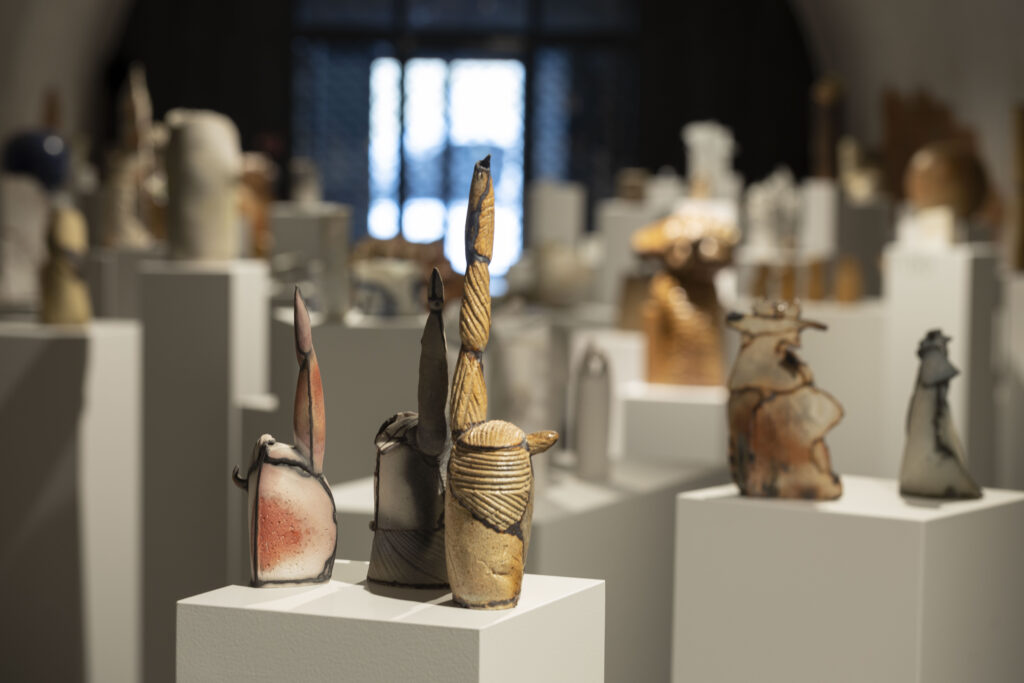
City of Dreams brings together ceramic works by Pēteris Martinsons (1931–2013), the Daugavpils-born artist, from the Rothko Museum collection. The core of this extensive retrospective entered the museum in 2013, when Martinsons donated a large body of his work to the then-Rothko Centre. Over the following decade, the collection grew through further gifts from the artist’s family and contemporaries, alongside targeted museum purchases.
Art history remembers Pēteris Martinsons as Latvia’s most internationally renowned ceramic artist of the twentieth century. He raised the profile of Latvian art well beyond national borders and reshaped the course of Latvian contemporary ceramics, steering it towards sustained innovation and excellence. As a leading figure among the legendary Ķīpsala ceramicists and a long-standing participant and artistic director of the Dzintari Symposium, Martinsons played a foundational role in two major cultural phenomena that shifted Latvian ceramics away from its traditional applied role and established it as a vibrant contemporary medium. In doing so, he inspired generations of ceramic artists in Latvia and beyond.
Originally trained as an architect, Martinsons spent his creative life building his own city of dreams – a visionary world of tectonic structures inhabited by quirky creatures. His ceramic practice is marked by restless inventiveness, moving freely between ideas, forms, materials, and techniques, and shaped by the many places where his works were made.
As Martinsons himself might have said, “by chance, accident, or a beautiful coincidence”, in 2022, the Rothko Museum opened Martinsons House in the former gunpowder magazine of the Daugavpils Fortress’s 7th Bastion. Conceived as a home, the space quietly echoes the artist’s lifelong search for a sense of settlement and belonging – something his largely nomadic creative life never quite allowed him to achieve.
Alongside its permanent display, Martinsons House hosts a lively programme of temporary ceramics exhibitions. Part of the building serves as an open storage space where visitors can explore the Rothko Museum’s ceramics collection. In the winding corridors encircling the inner chamber, Martinsons’s ink drawings, transferred onto glass, appear as luminous studies – meditative, precise, and revealing the artist’s lifelong training of hand and thought.