
Porcelain and the Machine
Rokas Dovydėnas (Lithuania)
This exhibition traces three centuries of porcelain’s evolving language – from the technical breakthroughs of early European manufactories to contemporary experiments that pair this age‑old material with digital fabrication. Inspired by archival forms and the inventive spirit of Johann Friedrich Böttger and his successors, the project explores how porcelain’s elegance and fragility have been shaped by craftsmanship, patronage, and shifting aesthetics. It also asks a timely question: what happens when the hand yields part of its authority to algorithmic design and robotic making?
“This two-year project began as an exploration of how the discovery of porcelain transformed vessel forms in Europe. Inspired by Johann Friedrich Böttger (1682–1719), the inventor of European porcelain, my research took me through Germany, Poland, and Lithuania, where museum collections revealed three centuries of innovation in this remarkable material. Studying the works of Böttger, Johann Joachim Kaendler, and Johann Gottlieb Kirchner, I encountered both extraordinary craftsmanship and the unmistakable imprint of power.
At the heart of this story stands Augustus the Strong (1670–1733), Elector of Saxony and King of Poland, whose passion for porcelain led to the founding of the Meissen Manufactory and the accumulation of a collection of 24,000 pieces. Under his influence, European porcelain first imitated Chinese blanc-de-Chine, producing pagodas, stylised animals, and exotic forms. Baroque, Rococo, and Chinoiserie aesthetics converged in their pursuit of asymmetry, luxury, and playful extravagance.
By 1770, more than twenty manufactories operated across Europe, including in the Polish–Lithuanian Commonwealth. Notable foundations included the Royal Faience Manufactory in Warsaw, Czartoryski’s porcelain works in Lithuania, and the Ćmielów manufactory in Poland. In Lithuania, production later began at the Jiesia factory in Kaunas (1978).
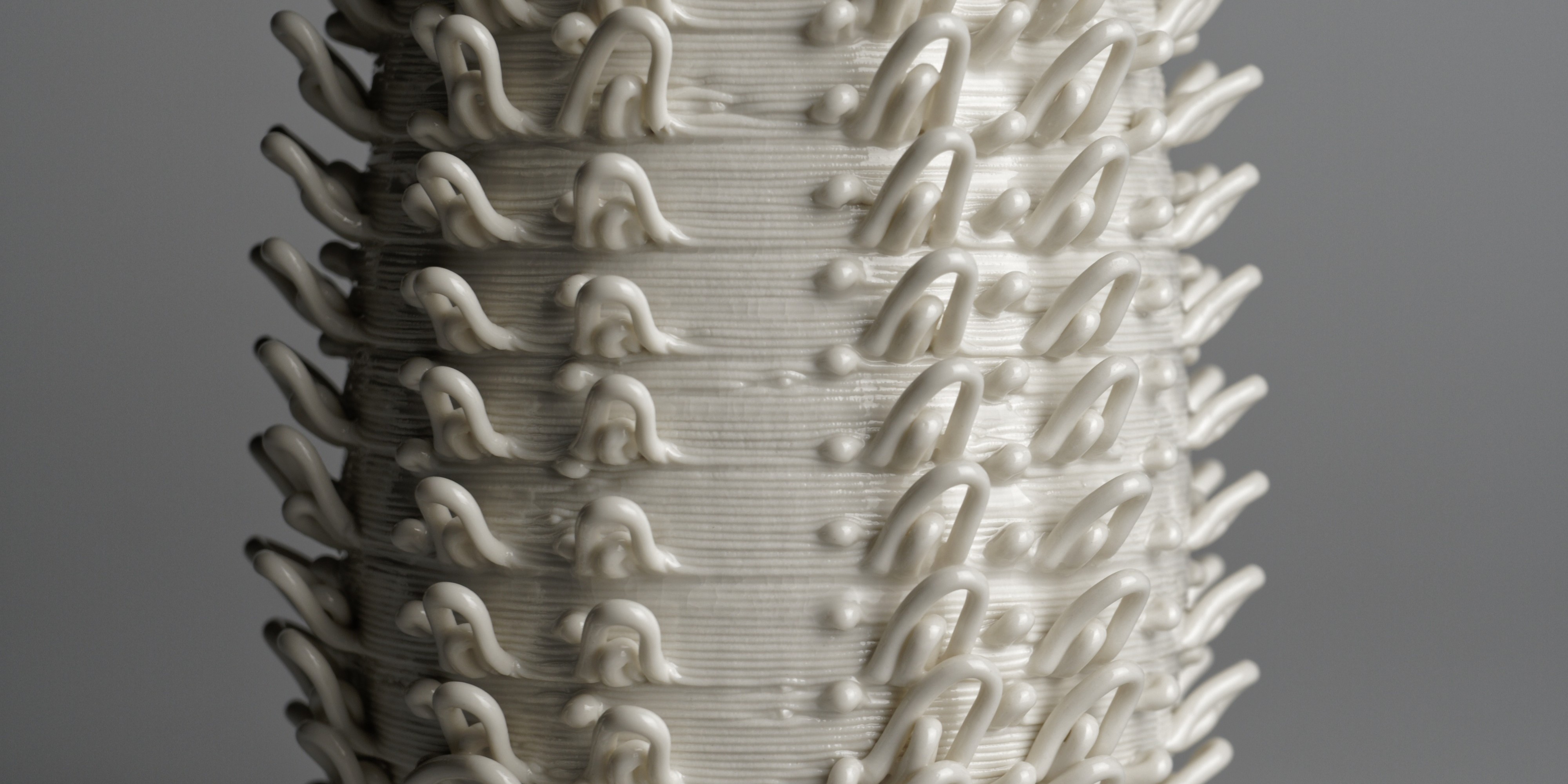
Porcelain’s allure continues into the 21st century, inspiring new artistic experiments. The exhibition “Porcelain and the Machine” presents my reinterpretations of historical vase forms. Using Limoges porcelain fired at 1250°C, my works follow the blanc-de-Chine tradition of white vessels with transparent glaze. Yet their creation belongs to a new era: designed with computer modelling and produced by 3D clay printers, they embody the meeting of centuries-old material with robotic precision.”
Dr. Rokas Dovydėnas
Doctor of Arts, interdisciplinary artist and curator Rokas Dovydėnas has participated in exhibitions in Lithuania and internationally since 1994, presenting fifteen solo shows and curating eleven exhibitions. He has taught art and design at the Lithuanian University of Educational Sciences and Mykolas Romeris University since 2014, and has lectured at the Vilnius Academy of Arts since 2018. His works are held in major collections, including the M. K. Čiurlionis National Museum of Art, the Lithuanian National Museum of Art, and the Leipzig Museum of Applied Arts (Grassi Museum für Angewandte Kunst), as well as in private collections.
Curated by Aivars Baranovskis
On view at the Rothko Museum’s Martinsons House from 5 December 2025 to 8 February 2026
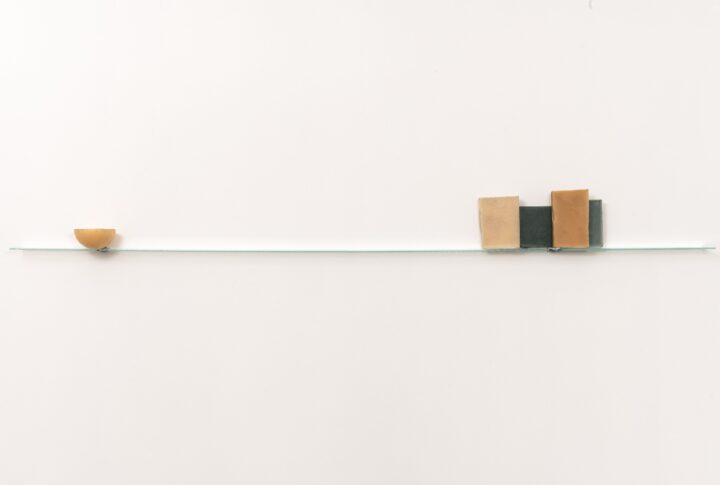
Publicity image: Rokas Dovydėnas. A Meiping Vase. Porcelain, glaze, 3D printing. 2024