
Martinsons Award
Venue: Rothko Museum, Daugavpils
The Latvia Ceramics Biennale is one of the most significant contemporary ceramics events in the Baltic Sea region. Organised by the Latvian Centre for Contemporary Ceramics in collaboration with Rothko Museum, the biennale brings together artists from around the world to develop and strengthen the role of contemporary ceramics in Latvia and the Baltic region. As part of the biennale, Rothko Museum in Daugavpils hosts the Martinsons Award, an international ceramics competition exhibition that celebrates the vitality of ceramic art and pays tribute to the internationally renowned Latvian ceramic artist Pēteris Martinsons.
The biennale’s central event, the international competition exhibition Martinsons Award, honours the legacy of Pēteris Martinsons (1931–2013), an outstanding Latvian ceramic artist, innovator and educator. In 2025, the competition received 941 submissions from 69 countries. An international jury of experts selected 80 outstanding works from 30 countries for the exhibition, including 23 works by Latvian artists. The selection spans the full spectrum of creative expression, from intricately crafted, technically accomplished and conceptually mature compositions to free, experimental forms in which clay itself determines the rhythm and character, revealing the poetry of both human craftsmanship and the material’s inherent nature.
The open call for the international competition exhibition Martinsons Award 2027, part of the 6th Latvia Ceramics Biennale, has not yet been announced. Information about the competition regulations, application requirements and deadlines will be published in this section. Please follow the Rothko Museum website and social media channels for updates.
Martinsons Award 2025
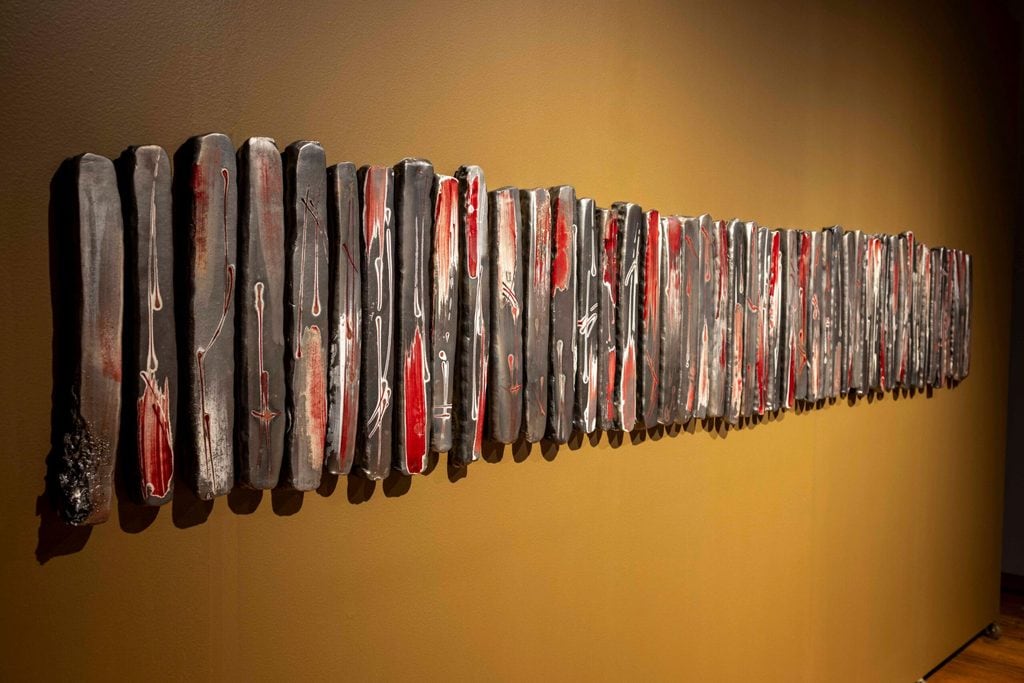
Lilija Zeiļa
Gold Award
I draw inspiration from nature – the rhythm of the seasons and the ever-changing landscape. What brings me the greatest joy is the opportunity to translate these impressions into ceramics, along with the quiet satisfaction I feel when a work takes its final form. The most surprising moments are those when the result exceeds my expectations. This is especially true after firing, as the touch of fire can leave unexpected traces.
Over time, I have developed my own distinctive style, deeply rooted in ceramic traditions. I still prepare all my decorative materials myself and prefer wood firing. Even after many years, there is always room for experimentation, discovery and surprise.
The title “Burnt Landscape” came to me when the work was almost finished. It clearly echoes the biennale’s theme, “From Stardust to Lush Sprouts”, as the words suggest both destruction and renewal. With this idea in mind, the creative process unfolded almost effortlessly. I often recall a saying: when a ballet dancer flies across the stage, the audience sees neither sweat nor effort, only lightness. That is precisely what I wanted to achieve – a sense of vitality and freedom. No beginning and no end, only presence in the here and now.
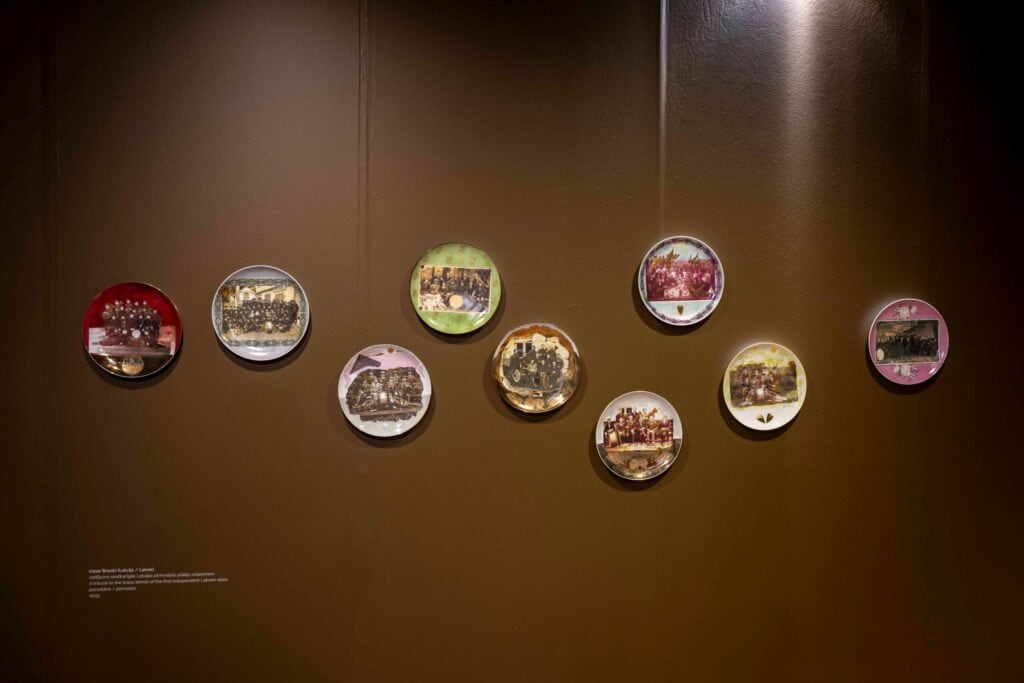
Inese Brants
Gold Award
“Tribute to the Brass Bands of Latvia’s First Period of Independence”, porcelain, 2025
This series of works is dedicated to Latvia’s freedom fighters and the defenders of our country’s independence. For the overglaze decoration of porcelain plates, I used historical photographs of brass bands from Latvia’s first period of independence, sourced from the collections of twelve Latvian museums. My techniques included digital image processing, collages of digitally printed and screen-printed decals, hand drawing and painting, lustre decoration, platinum and gold detailing.
After digitally processing the photographs and receiving the printed decals I had ordered, I realised that, since fine porcelain is traditionally associated with lavish gilding, I might as well use those precious metals. Let everything shine and sparkle like the mountains of silver, gold and diamonds in Latvian fairy tales. Those men of iron, who fought for the independence of our precious homeland, Latvia, have truly earned it.
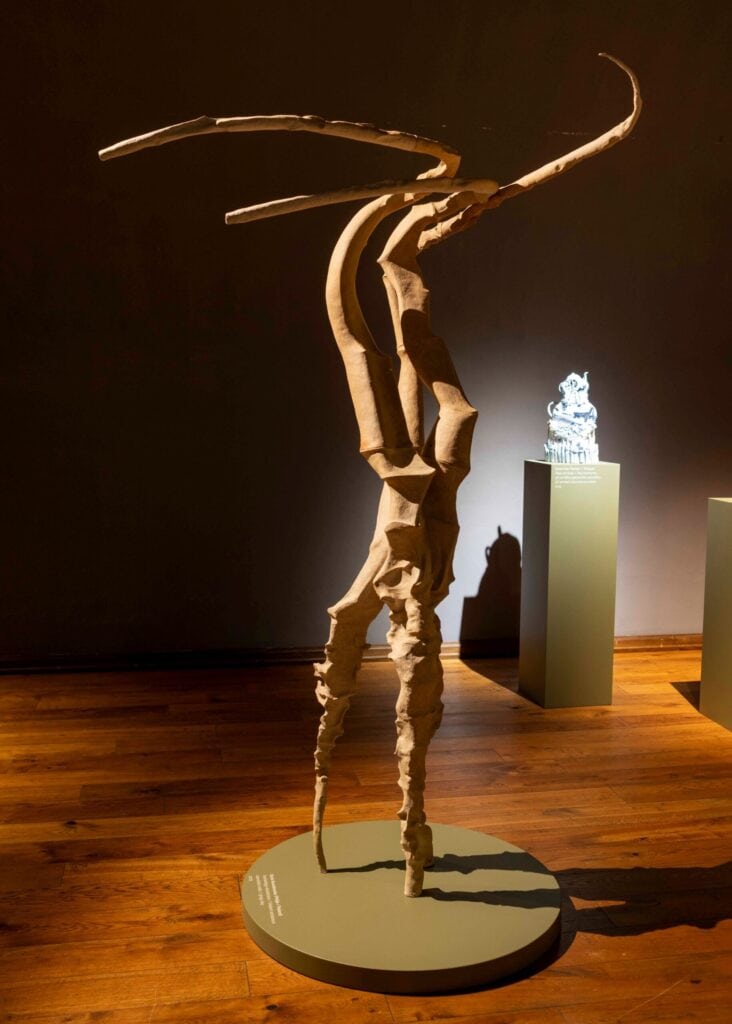
Daria Kowalewska
Gold Award
“Violent Existence”, grogged clay, 2023
In my artistic practice, I primarily work with grogged clay, porcelain and engobes, occasionally combining ceramics with wood and metal. I use the natural colours and textures of these materials to explore concepts of transformation and decay, as well as the fluid relationships between nature, culture and technology. My sculptural objects, often consisting of multiple elements, balance between reality and myth, revealing how natural processes shape our perceptions of possible future scenarios. I am particularly interested in the healing and regenerative potential of natural materials and plants, and in how exploring the behaviour of materials can deepen our understanding of cycles of growth and renewal.
“Violent Existence” embodies strength and upward movement, extending in three directions like an ephemeral being. The work was conceived as a reflection on the interdependence of humans and nature. Its twisting form conveys energy and vitality. Expressed through ceramics, this gesture also emphasises the resilience and regenerative capacity of matter – its permanence alongside its openness to change.
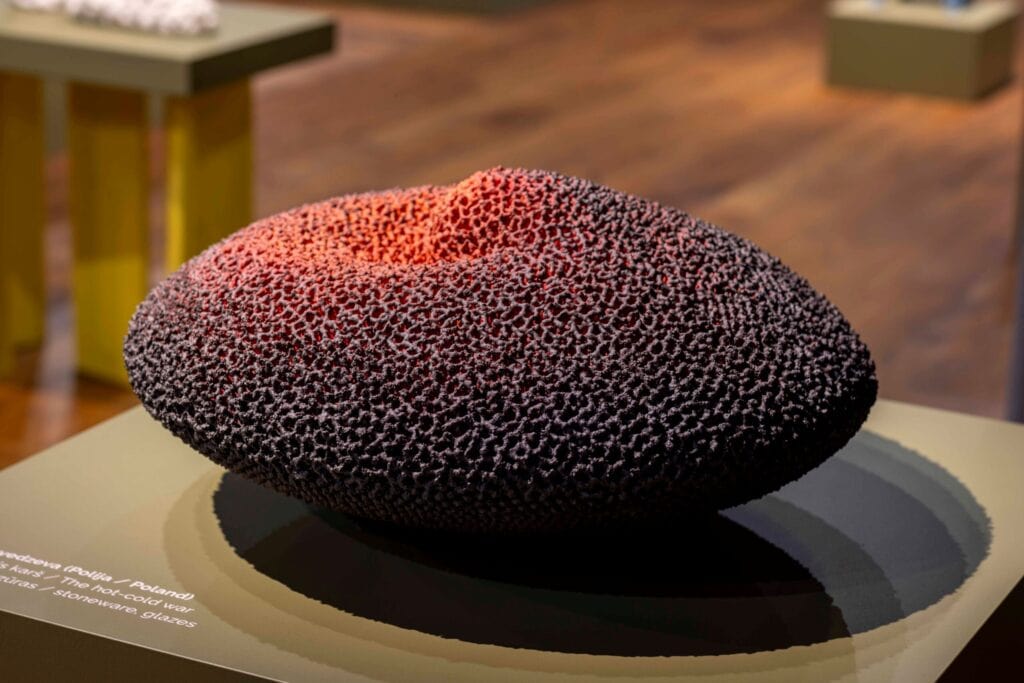
Hanna Miadzvedzeva
Silver Award
“Hot Cold War”, stoneware, glazes, 2025
“Hot Cold War” explores the fragile balance between outward composure and inner anxiety. The work reflects what it means to live in turbulent times, when conflicts erupt with increasing frequency and violence is no longer a distant abstraction but a real and immediate experience that generates inevitable inner tension. This deep pressure reflects our psychological state in the face of threatening uncertainty: we strive to maintain an appearance of calm while anxiety grows and intensifies beneath the surface, threatening to erupt at any moment. The sculpture embodies this duality – something contained yet explosive, seemingly calm yet burning within. These contradictions illustrate the precarious state of balance in a world permeated by conflict.
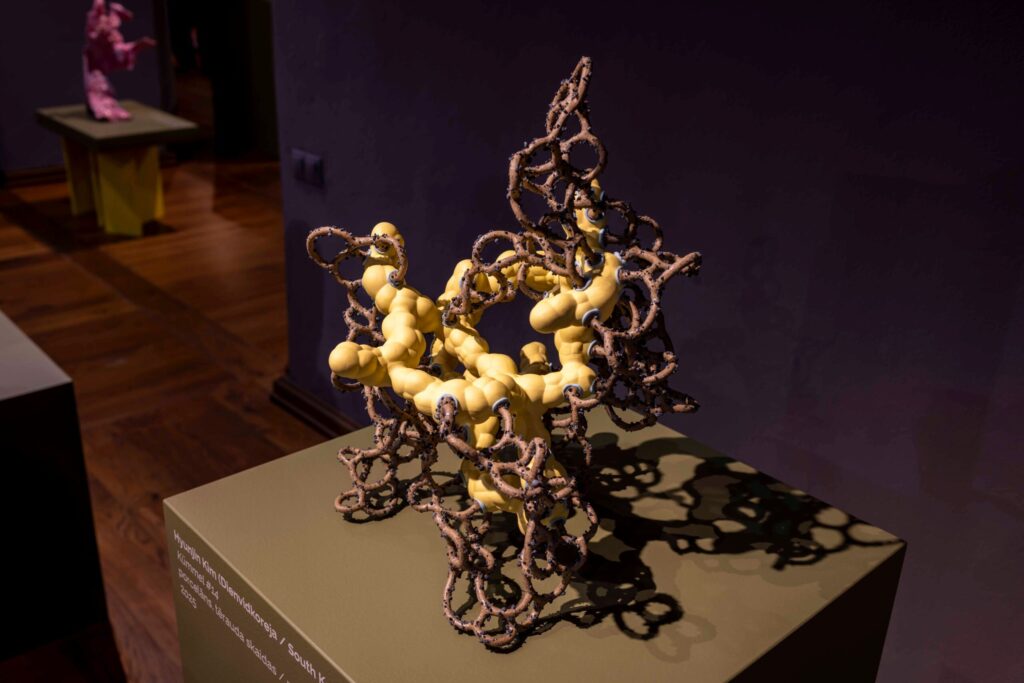
Hyunjin Kim
Silver Award
“K Kümmel #14”, porcelain, steel shavings, 2025
My artistic practice begins with recognising emotions as a dynamic experience of presence. Fluid and transient, they shape our relationships and transform space and form. Feelings arise and pass, disappear and return, continually renewing themselves through the passage of time and the intricate web of human connections. Through my work, I seek to visualise these emotional tides and explore how our inner selves become interwoven with the fabric of the external world.
My creative process usually unfolds intuitively rather than according to a rigid plan. I am interested in how the fundamental elements of visual language – point, line and plane – intertwine and develop into organic forms. This process echoes the rhythm of emotions: expansion and contraction, collision and the restoration of balance. In this way, the development of a composition becomes a record of the flow and transformation of feelings.
Emotions are not linear. They overlap, intersect and form layers, and my work seeks to capture these complex, multilayered structures. Recently, I have continued exploring emotional tides and structures through the series “Kümmel, Full and Empty” and “Everything Flows, Everything Changes”.
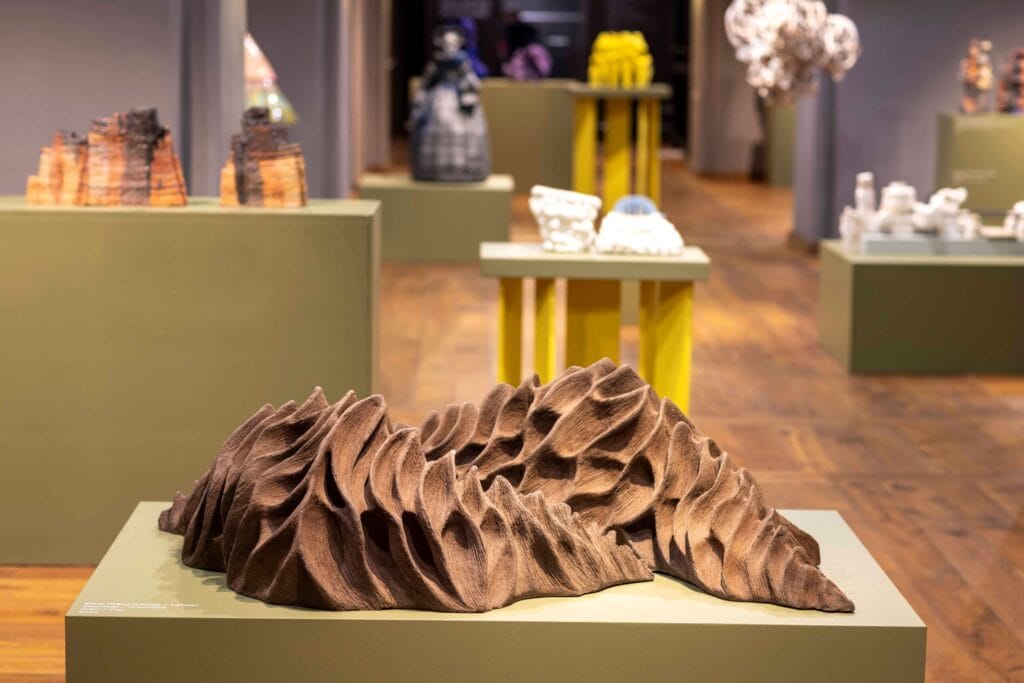
Elīna Titāne
Honourable Mention and Residency Award
“Dreamers”, clay, 2024
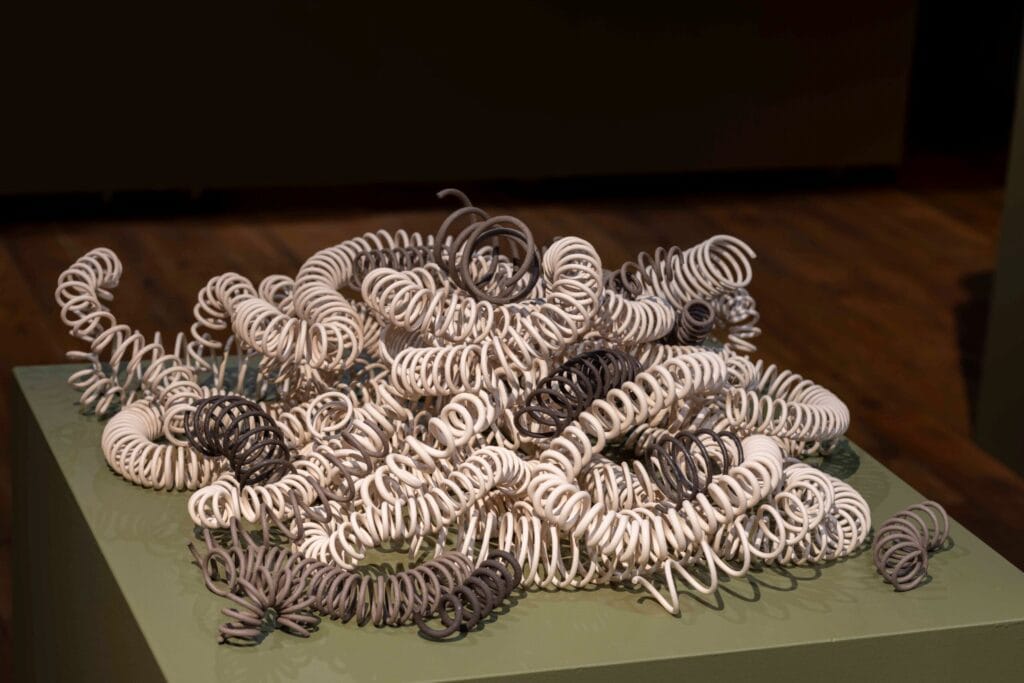
Agate Kalcenaua
Honourable Mention and Keramserviss Ltd Award
“Striving and Playing”, stoneware, 2024
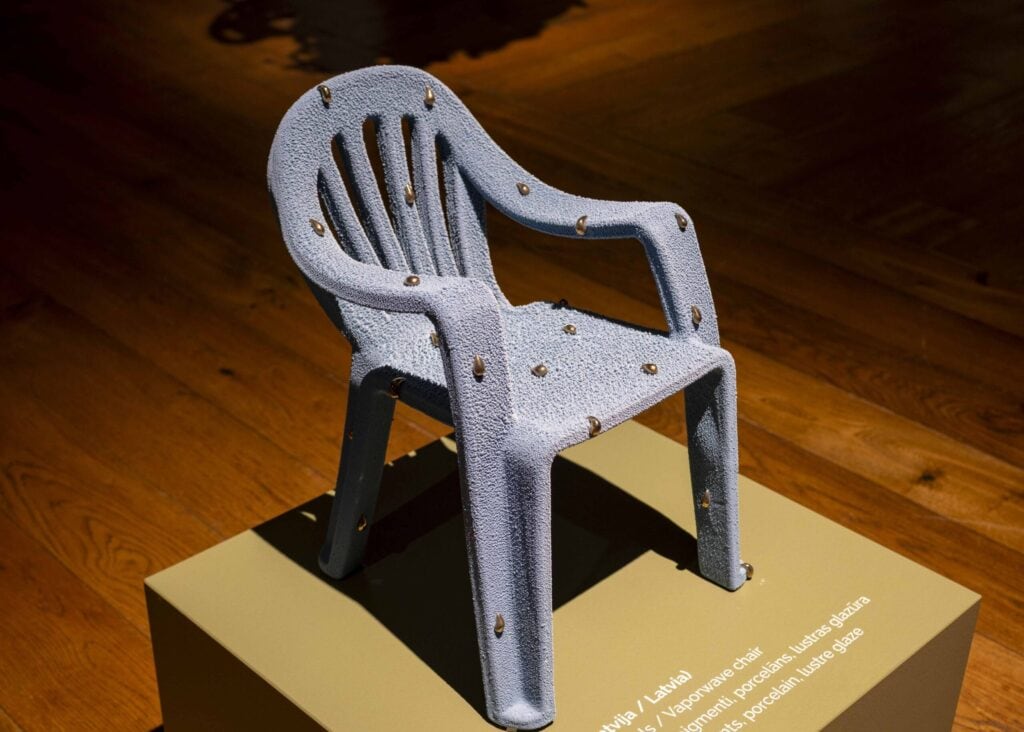
Laima Lauriņa
Honourable Mention and Keramserviss Ltd Award
“Vaporwave-Style Chair”, stoneware, engobe, pigments, porcelain, lustre glaze, 2025
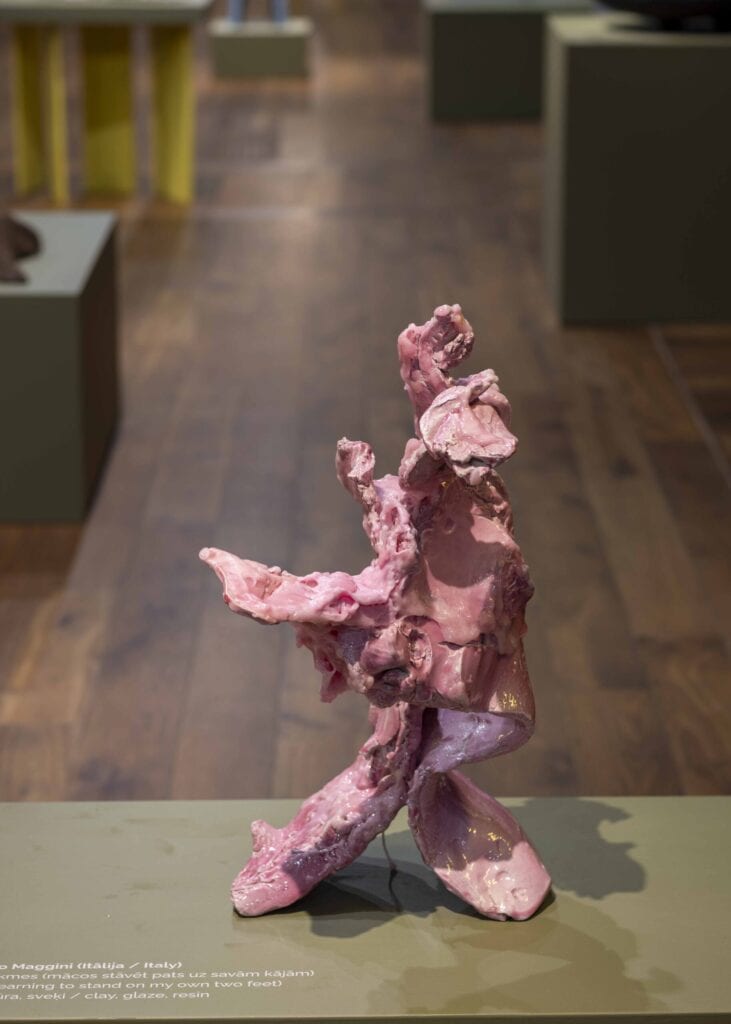
Guglielmo Maggini
Honourable Mention and Residency Award
“Vertigo Attacks (Learning to Stand on My Own Feet)”, clay, glaze, resin, 2025
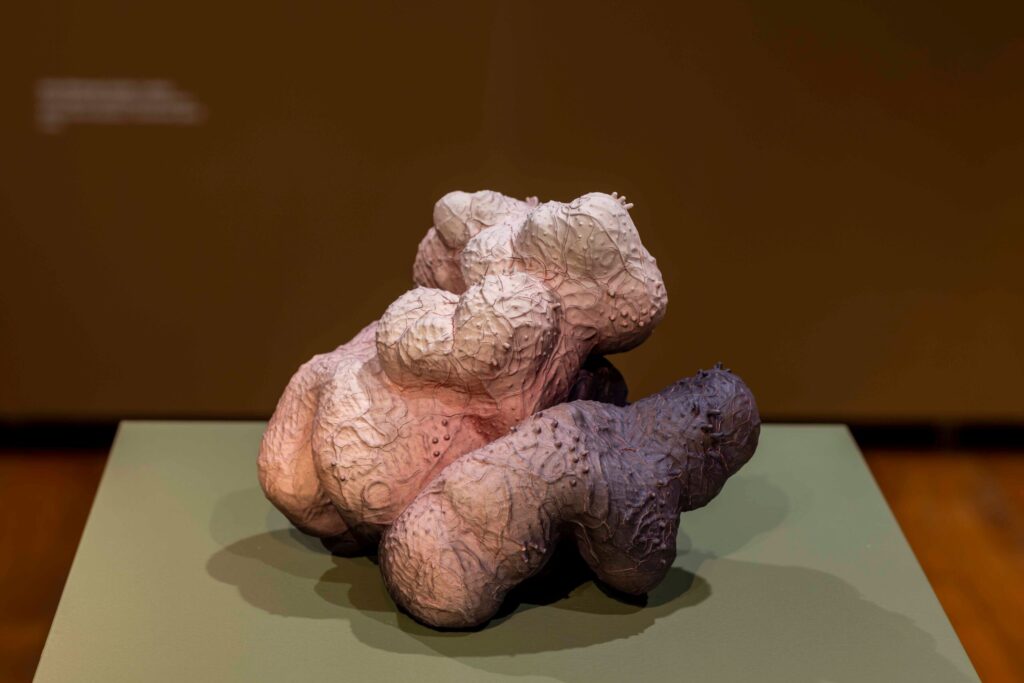
Michał Żesławski
Honourable Mention and Residency Award
“Merged”, stoneware, 2025
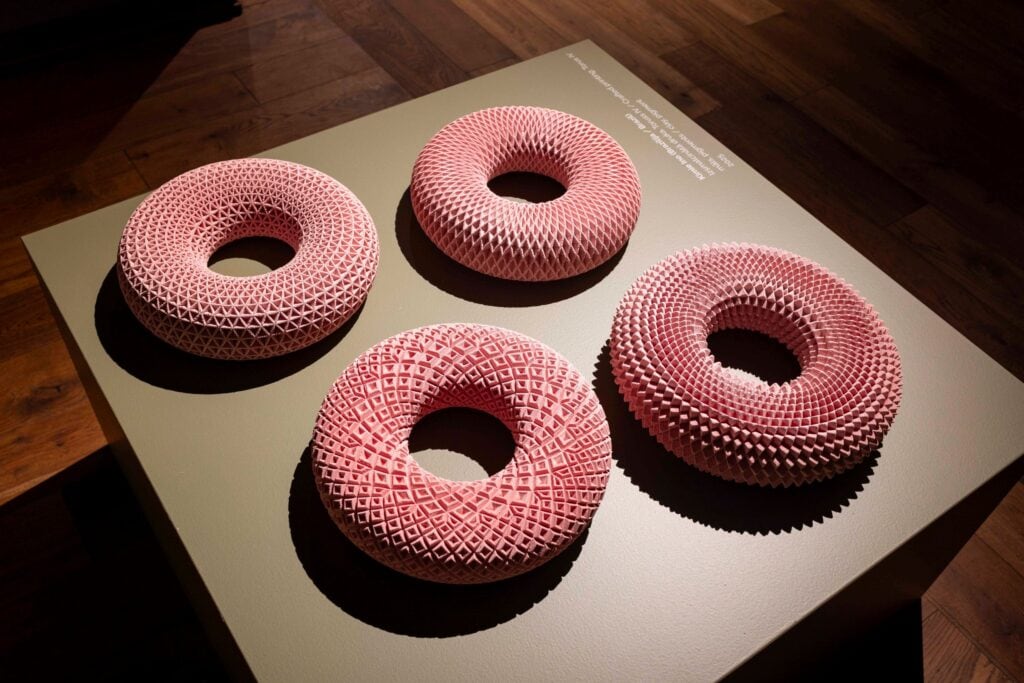
Kimie Ino
Honourable Mention
“Exquisite Print. Torus IV”, clay, pigment, 2025
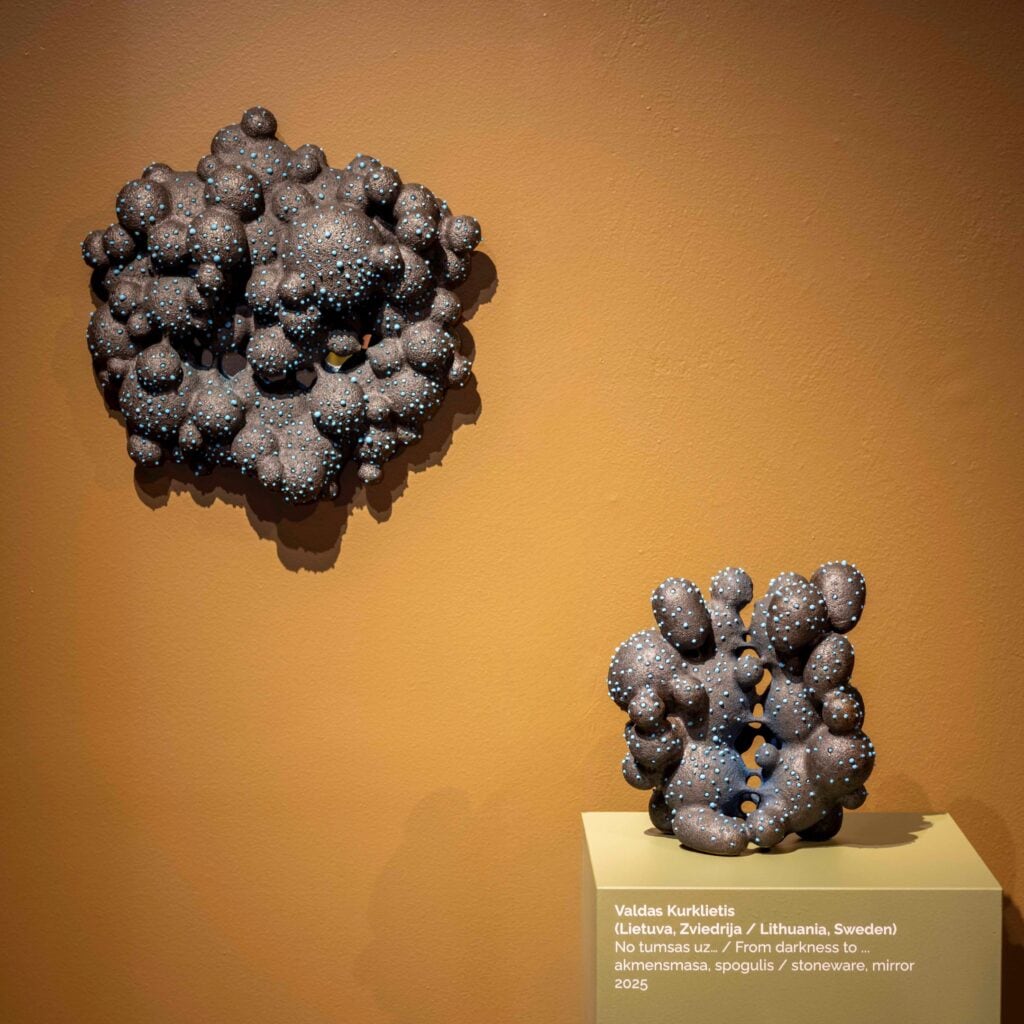
Valdas Kurklietis
Honourable Mention
“From Darkness to…”, stoneware, mirror, 2025
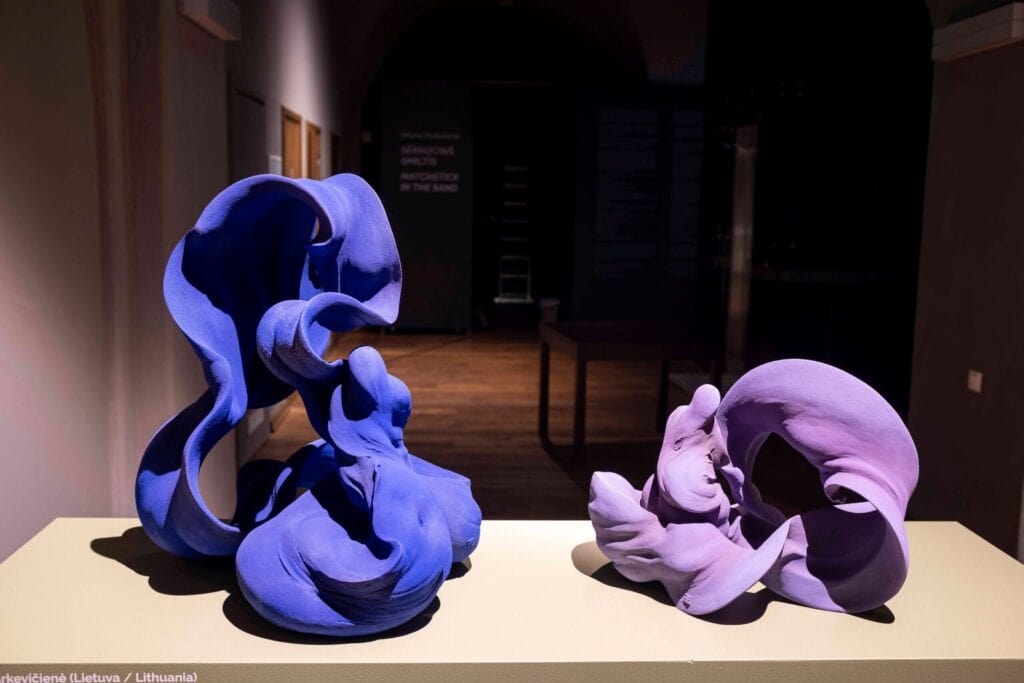
Eglė Einikytė-Narkevičienė
Honourable Mention. “Duality Between Different Worlds”, stoneware, pigments, 2025
Agnė Šemberaitė (Lithuania)
Aliona Kryshtofik (Poland)
Andrii Kyrychenko (Ukraine)
Anne Türn (Estonia)
Asta Volkensfeld (Germany)
Chen Xiao (China)
Cheng Chung Yu (Taiwan)
Daria Kowalewska (Poland)
Denny Gerwin (USA)
Eglė Einikytė-Narkevičienė (Lithuania)
Ellen van der Woude (Luxembourg)
Emre Can (Turkey)
Eveline Kieskamp (Netherlands)
Eyvind Solli (Norway)
Fania Kolaiti (Greece)
Guglielmo Maggini (Italy)
Hajnalka Tarr (Hungary)
Hanna Miadzvedzeva (Poland)
Heide Nonnenmacher (Germany)
Henna Nuutinen (Finland)
Huang Zheng (China)
Hyojung Yun (South Korea)
Hyunjin Kim (South Korea)
Ihor Kovalevych (Ukraine)
Bon Solin (South Korea)
Johana Hnizdilova (Czech Republic)
Juliette Clovis (France)
Kála Kovács (Hungary)
Karin Putsch-Grassi (Italy)
Kauri Kallas (Estonia)
Keshari Nandan Parsad (India)
Kimie Ino (Brazil)
Krisaya Luenganantakul (Thailand)
Kwan Hei Myron Lai and Silvester Mok (Hong Kong)
Lena Majsiak (Poland)
Leonardo Bartolini (Italy)
Liu Kim (South Korea)
Mahesh Jagtap (India)
Makiko Nagai (Japan)
Malwina Kowalewska (Poland)
Michael Rice (Ireland/UAE)
Michał Żesławski (Poland)
Miglė Janušaitė (Lithuania)
Nathalie Kehrli (Switzerland)
Neringa Akcijonaitytė (Lithuania)
Olga Simonova (Germany)
Rima Leipuvienė (Lithuania)
Rūta Šipalytė (Lithuania)
Silvia Tagusagawa (Brazil)
Sofia Beça (Portugal)
Sofiia Horbachevska (Ukraine)
Suzy Balkert (Switzerland)
Valdas Kurklietis (Lithuania/Sweden)
Velimir Vukicevic (Serbia)
Viktória Maróti (Hungary)
Yuan-Shan Chen (Taiwan)
Zhang Fei (China)
Agate Kalcenaua
Ainārs Rimicāns
Astra Šēnberga
Dace Grīnberga
Dace Blūma
Diāna Boitmane
Eleonora Pastare
Elīna Titāne
Eugenia Loginova
Inese Brants
Jānis Kupčs
Juta Rindina
Kristīne Niedrāja
Laima Lauriņa
Līga Skariņa
Lilija Zeiļa
Maira Karstā
Rūdis Pētersons
Tatjana Jersova
Una Gura
Valda Podkalne
Vita Valdmane
Zahars Ze